Can You Really Avoid Surgery? A Complete Guide to Modern Non-Surgical Treatments
For many people, the word “surgery” brings fear—long recovery times, hospital stays, pain, and disruption to daily life.
A very common question patients ask today is:
“Is there any way I can avoid surgery?”
The good news is—in many cases, yes, you can.
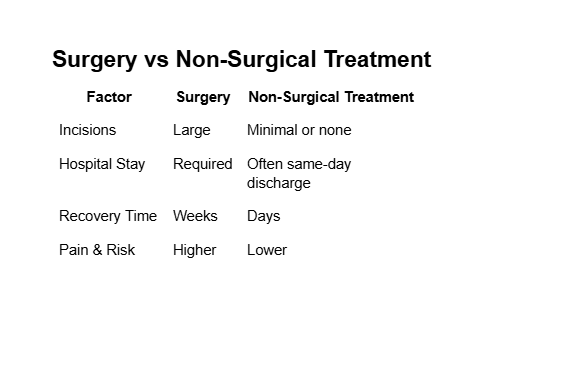
Thanks to advancements in medical science, a wide range of non-surgical and minimally invasive treatments are now available that can effectively treat conditions without the need for traditional surgery.
What Does “Non-Surgical Treatment” Really Mean?
Non-surgical treatments are procedures that:
These treatments focus on treating the root cause while keeping the body as undisturbed as possible.
Conditions That Can Often Be Treated Without Surgery
Today, many common health problems can be managed without open surgery, such as:
With the right diagnosis, patients can explore safe alternatives that avoid major procedures.
Examples of Modern Non-Surgical Treatments
Here are some advanced options that are helping patients avoid surgery:
Image-Guided Procedures
Minimally invasive treatments performed using imaging technology to precisely target the problem area.
Laser & Endovascular Treatments
Used in conditions like varicose veins and piles—these are quick and require minimal recovery time.
PRP (Platelet-Rich Plasma) Therapy
A natural treatment that uses your own blood to promote healing in joints, hair loss, and more.
Catheter-Based Treatments
Used in conditions like prostate enlargement and knee pain, where treatment is done through tiny tubes inserted into blood vessels.
Can Everyone Avoid Surgery?
While non-surgical treatments are effective, they are not suitable for every patient or every stage of disease. The right option depends on:
That’s why early diagnosis is very important—the earlier you consult, the more options you may have to avoid surgery.
When Should You Consider Non-Surgical Options?
You should explore non-surgical treatments if:
Final Thoughts
So, can you really avoid surgery?
In many cases, yes—but the key is timely consultation and the right medical guidance.
Modern medicine has made it possible to treat many conditions safely and effectively without going under the knife. The important step is to understand your options and make an informed decision.
Take the First Step
If you are dealing with a health issue and wondering whether surgery is your only option, don’t wait.
Consult at bankers vascular hospital, explore alternatives, and choose a treatment plan that suits your condition and lifestyle.
Because sometimes, the best treatment…
is the one that helps you heal without surgery.


Comments
Post a Comment