Who Is Not a Candidate for PRP Hair Treatment?
Platelet-Rich Plasma (PRP) therapy has gained popularity as a non-surgical solution for hair thinning and early hair loss. It uses a patient’s own blood platelets to stimulate hair follicles and improve hair density.
However, PRP is not suitable for everyone. Knowing who should avoid or delay PRP treatment is just as important as knowing who benefits from it.
In this blog, we explain who is not an ideal candidate for PRP hair treatment, based on medical evidence and real-world clinical experience.
What Is PRP Hair Treatment?
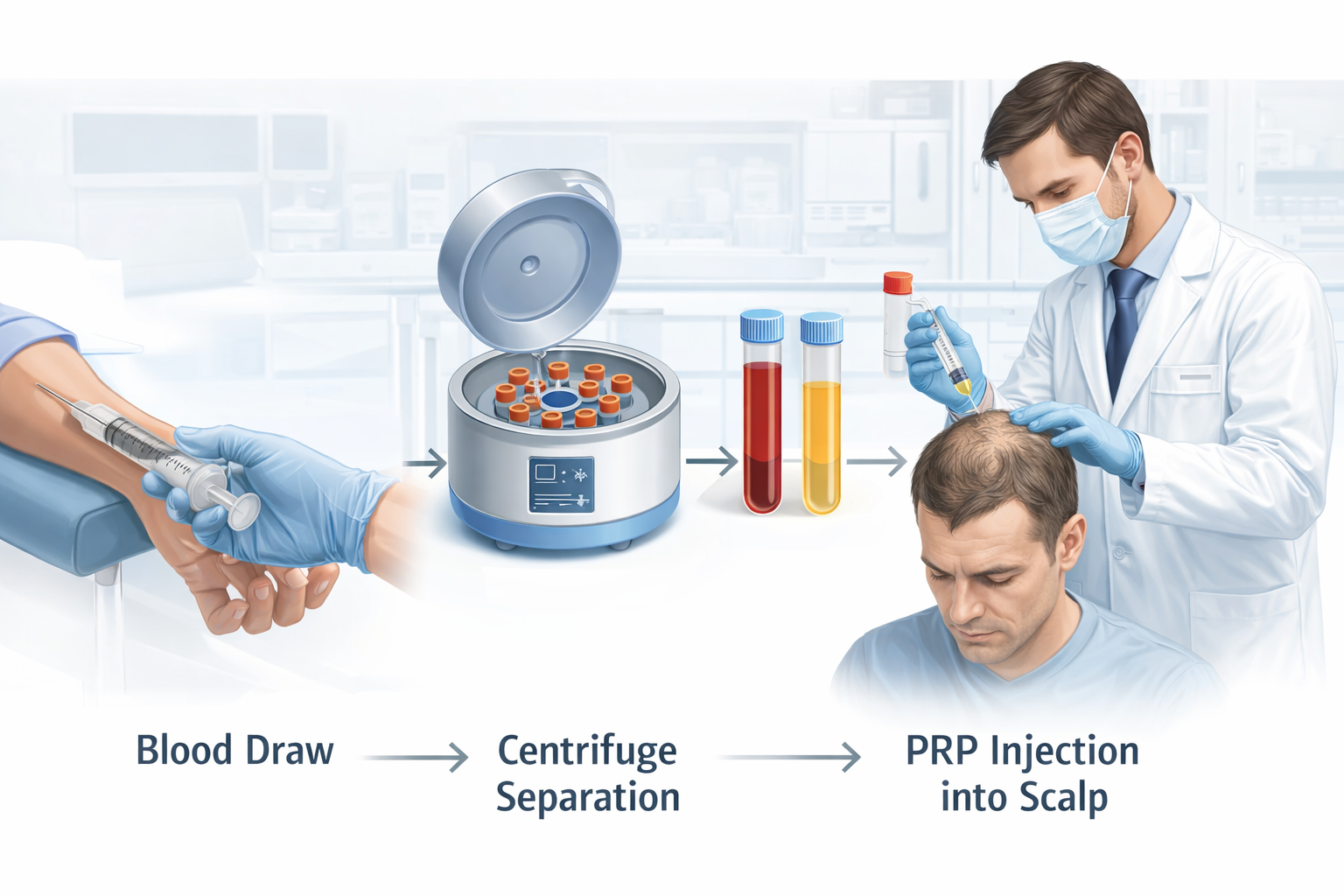
PRP therapy involves:
Platelets release growth factors that help revive weak hair follicles, slow hair fall, and improve hair thickness — but only if viable follicles are present.
Who Is NOT a Candidate for PRP Hair Treatment?
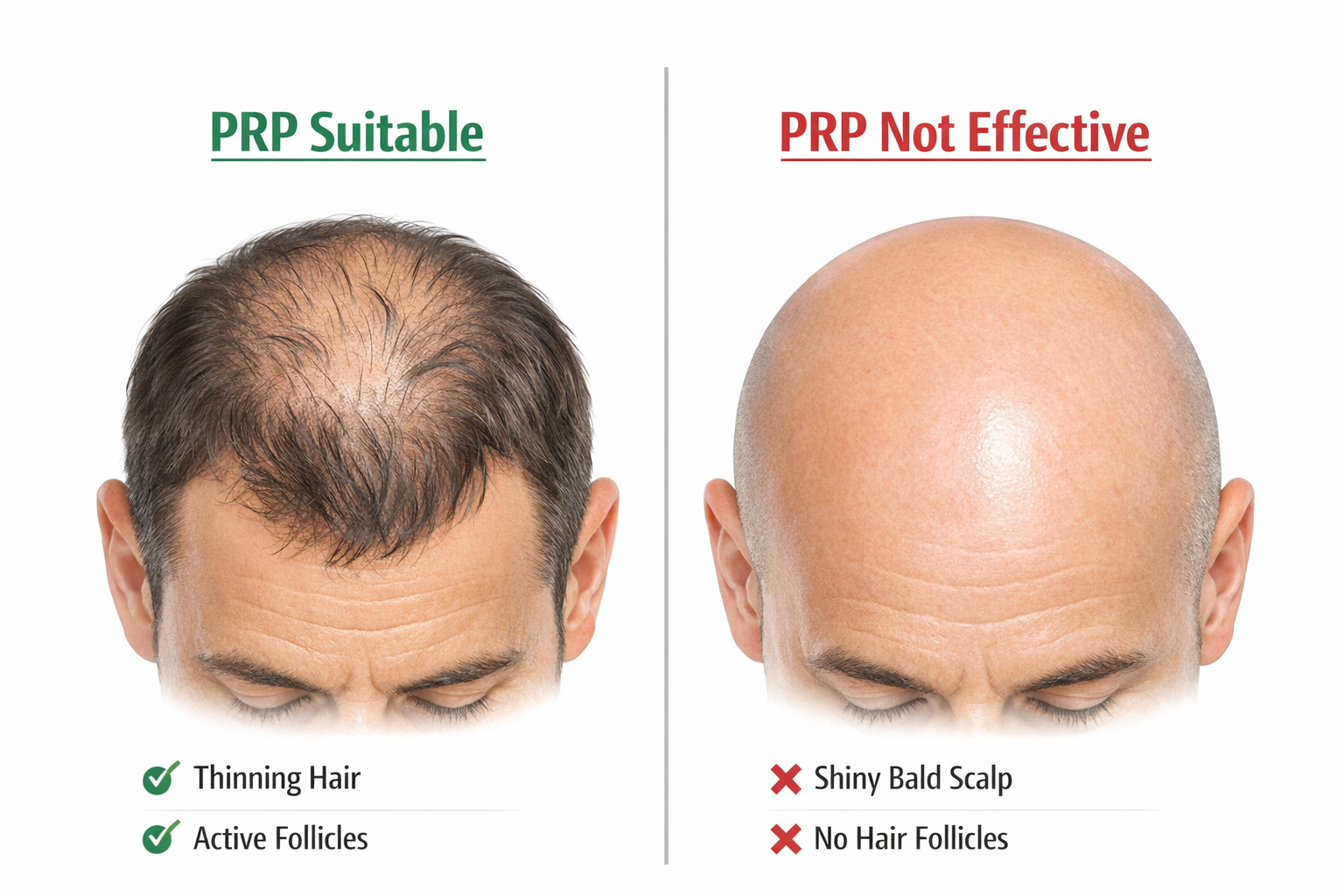
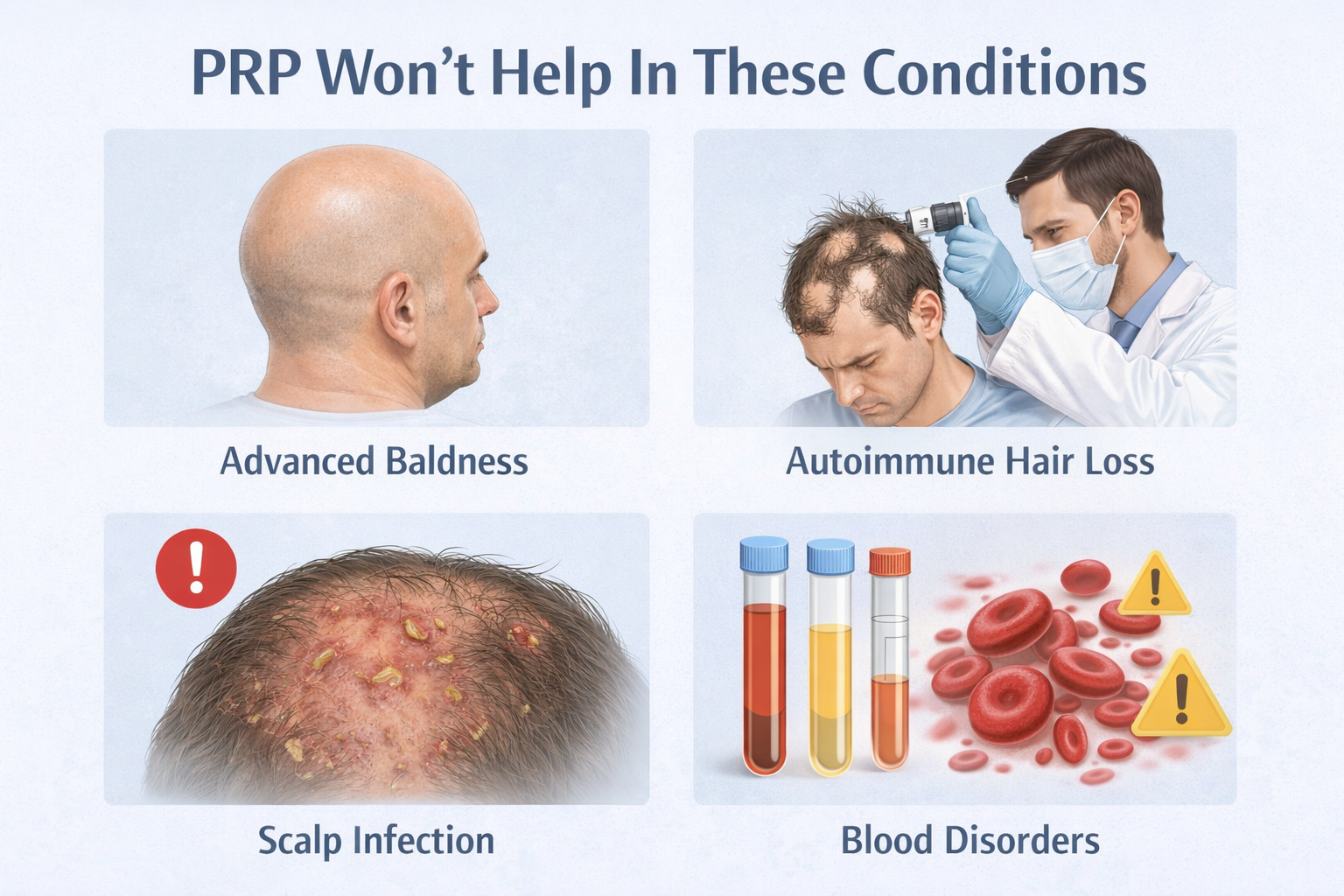
1. People with Complete Baldness
PRP cannot regrow hair in areas where follicles are completely dead.
❌ Not suitable if:
In such cases, hair transplant or other advanced treatments may be required.
2. Patients with Blood Disorders
Since PRP uses your own blood, certain conditions make the treatment unsafe or ineffective.
PRP is not recommended for people with:
These conditions reduce platelet quality and increase procedure risk.
3. People with Active Scalp Infections or Skin Diseases
PRP injections should never be done on an unhealthy scalp.
❌ Avoid PRP if you have:
These conditions must be treated first before considering PRP.
4. Patients with Autoimmune Diseases
Certain autoimmune conditions attack hair follicles directly, making PRP ineffective.
PRP may not work well in:
These patients need specialist evaluation and immune-modulating therapy.
5. People on Blood Thinners
Medications that affect blood clotting can interfere with PRP safety and results.
PRP may be avoided or postponed in patients taking:
Always consult your doctor before stopping or modifying medication.
6. Patients with Uncontrolled Medical Conditions
PRP should be postponed if you have:
These conditions impair healing and platelet function.
7. People Expecting Instant or Dramatic Results
PRP is not a miracle treatment.
❌ Not ideal for those who:
PRP works gradually, with visible improvement usually seen after 3–6 months.
8. Nutritional Deficiency Without Correction
PRP alone cannot overcome severe deficiencies.
PRP is less effective if:
Nutritional and hormonal correction is essential for success
Who Is a Better Candidate Instead?
PRP works best for:
✔ Early-stage hair thinning
✔ Androgenetic alopecia (male/female pattern hair loss)
✔ Hair fall due to stress or post-illness
✔ Patients with active but weak hair follicles
Final Words: Medical Evaluation Is Key
PRP hair treatment should never be a one-size-fits-all solution. A detailed medical history, scalp examination, and blood work help determine whether PRP is right for you.
Choosing the right patient ensures:
🏥 Bankers Vascular Centre
Backed by experienced specialists and evidence-based protocols, Bankers Vascular Centre offers advanced, safe, and personalized hair loss solutions.


Comments
Post a Comment