Understanding Piles: Why Minimally Invasive Techniques Are the Future
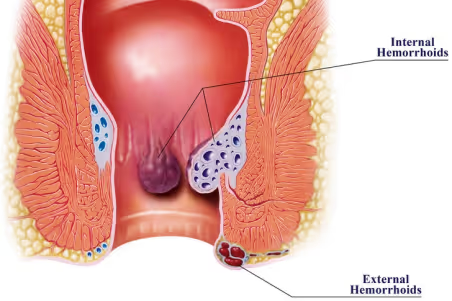
Piles, medically known as haemorrhoids, are a common yet often overlooked health issue. Millions of people experience symptoms such as pain, bleeding, itching, or discomfort—yet many delay treatment due to fear of surgery or embarrassment. Fortunately, medical technology has advanced significantly, and minimally invasive techniques are transforming how piles are treated today.
At our hospital, we are committed to offering advanced, patient-friendly solutions that ensure faster recovery and
long-lasting relief. Here’s a closer look at why minimally invasive procedures are becoming the future of piles treatment.
What Exactly Are Piles?
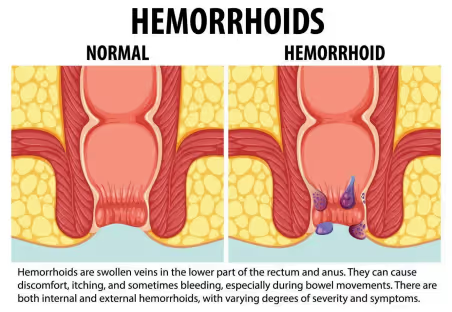
Piles occur when the blood vessels in the anus or lower rectum become swollen or inflamed. They can be:
● Internal piles – found inside the rectum
● External piles – located under the skin around the anus
Common causes include constipation, prolonged sitting, pregnancy, obesity, low-fiber diets, and straining during bowel movements.
While mild cases may respond to medication and lifestyle changes, advanced or recurrent piles often need procedural intervention.
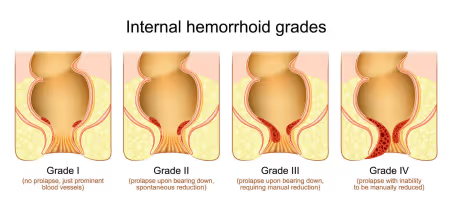
Traditional Surgery vs. Minimally Invasive Treatment
Traditionally, piles were treated with open hemorrhoidectomy, a procedure that often caused significant pain and required a long healing period. This fear of postoperative discomfort has kept many patients from seeking timely treatment.
Minimally invasive procedures have changed this narrative. These modern techniques focus on reducing tissue damage, minimizing pain, and promoting faster recovery.
What Is Haemorrhoidal Artery Embolisation (HAE)?
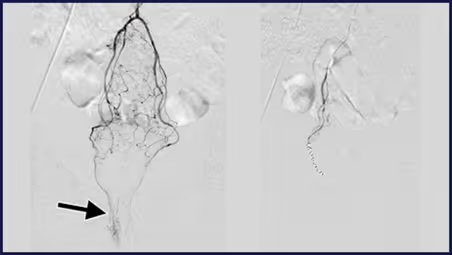
HAE is a minimally invasive procedure performed by an interventional radiologist. Instead of surgically removing haemorrhoids, the technique works by blocking the blood supply to the haemorrhoidal arteries, causing the swollen tissue to shrink over time.
Using imaging guidance, the doctor inserts a tiny catheter (usually through the wrist or groin) and places micro-coils or particles to reduce abnormal blood flow. The result is reduced swelling, bleeding, and discomfort—without traditional surgical incisions.
Key Benefits of Haemorrhoidal Artery Embolisation
1. Minimally Invasive With No Surgical Incisions
Unlike haemorrhoidectomy, which involves cutting tissue, HAE requires only a tiny puncture—meaning:
● No stitches
● Minimal scarring
● Reduced risk of infection
This makes it ideal for patients seeking effective relief without the trauma of surgery.
2. Significantly Less Pain Compared to Surgery
One of the biggest advantages of HAE is dramatically lower postoperative pain. Most patients experience mild discomfort rather than severe pain, allowing them to:
● Return to normal activities quickly
● Avoid strong pain medication
● Experience a more comfortable recovery period
3. Quick Recovery and Short Hospital Stay
HAE is typically performed as a day-case procedure, with many patients going home the same day. Recovery is fast—often just a few days—compared to weeks after traditional surgery.
This makes it especially appealing for:
● Working professionals
● Elderly individuals
● Patients seeking minimal downtime
4. Effective in Reducing Bleeding
Many patients seek treatment because of persistent or severe rectal bleeding. HAE directly targets the arteries feeding the haemorrhoids, resulting in:
● Significant reduction in bleeding
● Improvement in haemoglobin levels
● Symptom relief even in recurrent cases
5. Low Risk of Complications
Since the procedure avoids sensitive anal canal tissue, complications such as: ● incontinence
● anal stenosis
● severe postoperative bleeding
are extremely rare. This gives HAE an excellent safety profile compared with surgical alternatives.
6. Preserves Normal Anatomy
HAE does not remove or damage tissue. It preserves normal anorectal anatomy while alleviating symptoms. For people who want a treatment that respects natural structures, this is a major advantage.
7. Suitable for Patients Who Are Not Ideal Surgical Candidates
For patients who cannot undergo general anaesthesia or have other health conditions, HAE provides a safer option.
It’s often an excellent choice for:
● Elderly patients
● Those on blood thinners
● Patients with multiple medical conditions
Conclusion
Haemorrhoidal Artery Embolisation offers a modern, minimally invasive, and highly effective alternative to traditional haemorrhoid surgery. With reduced pain, fast recovery, preservation of normal anatomy, and excellent clinical outcomes, HAE is transforming how haemorrhoids are treated and significantly improving patient quality of life.
If you are struggling with persistent haemorrhoid symptoms, exploring HAE with a specialist may be your next step toward long-lasting relief.


Comments
Post a Comment