Sensory Loss in Diabetes – The Hidden Injury Risk You Shouldn’t Ignore
Diabetes is widely known for affecting blood sugar levels, but many people are unaware of one of its most dangerous complications — sensory nerve damage (diabetic neuropathy). When sensation reduces, especially in the feet and legs, the body loses its natural warning system. Small injuries go unnoticed, infections develop silently, and serious complications can follow.
This “hidden injury risk” is one of the leading causes behind diabetic foot ulcers, infections, and even amputations — yet it is often preventable with early awareness and care.
Let’s understand how this happens and how to protect against it.
What Is Sensory Loss in Diabetes?
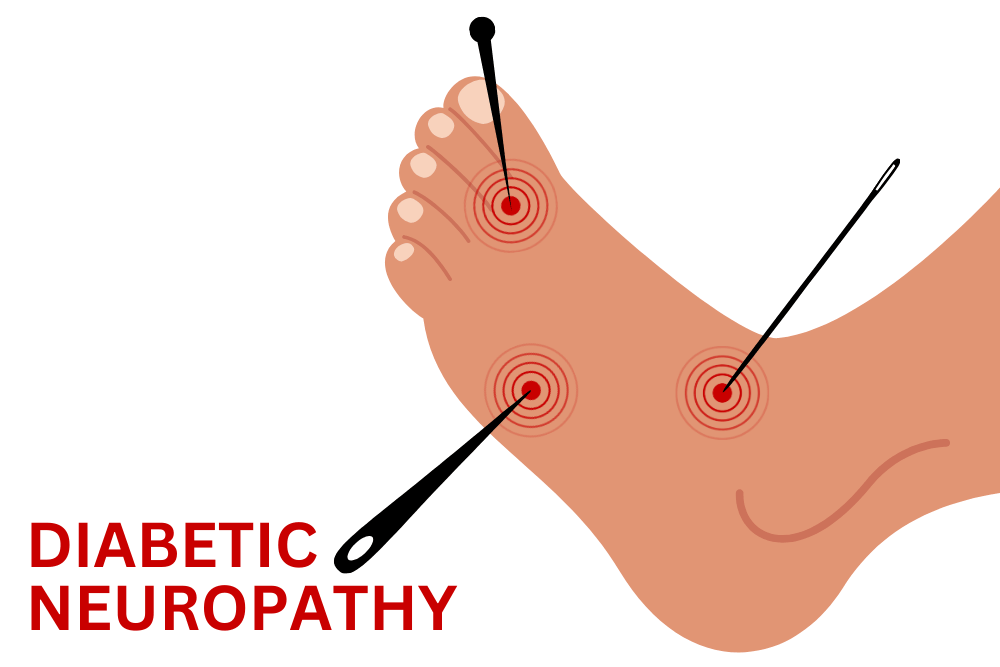
Long-standing or poorly controlled diabetes can damage peripheral nerves — the nerves that carry sensation from the skin to the brain. This condition is called diabetic peripheral neuropathy.
It usually starts in the toes and feet and gradually moves upward.
Commonly affected sensations include:
When these signals are reduced or lost, injuries may occur without the person realizing it.
Why Is Sensory Loss Dangerous?
Pain is protective. It tells you when something is wrong.
Without pain sensation:
By the time the problem is discovered, it may already be infected or deep.
This is why diabetic sensory loss is often called a “silent threat.”
Common Hidden Injuries Seen in Diabetic Sensory Loss
Patients with reduced sensation frequently develop:
🔹 Foot ulcers
Small wounds that do not heal and gradually deepen
🔹 Burns
From hot floors, heating pads, or hot water
🔹 Shoe pressure injuries
Due to tight or improper footwear
🔹 Cracked heels and skin fissures
Which allow bacteria to enter
🔹 Nail injuries
From improper nail trimming
🔹 Infections
Because injuries are detected late
Warning Signs of Diabetic Neuropathy
Many people ignore early symptoms. Watch for:
If numbness starts, risk begins — even if there is no pain.
Who Is at Higher Risk?
Risk increases with:
Even prediabetes can sometimes cause nerve symptoms.
How Doctors Detect Sensory Loss
Simple clinic tests can detect neuropathy early:
Early screening can prevent major complications.
How to Prevent Hidden Injuries
✅ Daily Foot Check (Non-negotiable)
Look for:
Use a mirror if needed.
✅ Smart Footwear
✅ Skin Care
✅ Temperature Safety
✅ Sugar Control
Better glucose control = slower nerve damage progression.
When to See a Specialist
Consult a doctor immediately if you notice:
Early treatment can save tissue — and sometimes save limbs.
Advanced Care Options
Depending on severity, treatment may include:
Key Takeaway
In diabetes, the most dangerous injuries are often the ones you cannot feel.
Loss of sensation is not just discomfort — it is a major injury risk.
Routine screening + daily foot care + timely treatment = strong protection.


Comments
Post a Comment