Why Diet & Exercise Fail for Some People
For years, people struggling with obesity have been told the same advice: “Eat less, move more.”
While diet and exercise are essential for good health, many individuals still fail to lose weight despite sincere efforts. This is not due to laziness or lack of willpower—it is biology.
Modern science now explains why traditional weight-loss methods don’t work for everyone and how Bariatric Embolization, a minimally invasive procedure, is emerging as a promising solution.
At Bankers Vascular Hospital, we bring this advanced, non-surgical weight-loss option to patients who have tried everything and still struggle.
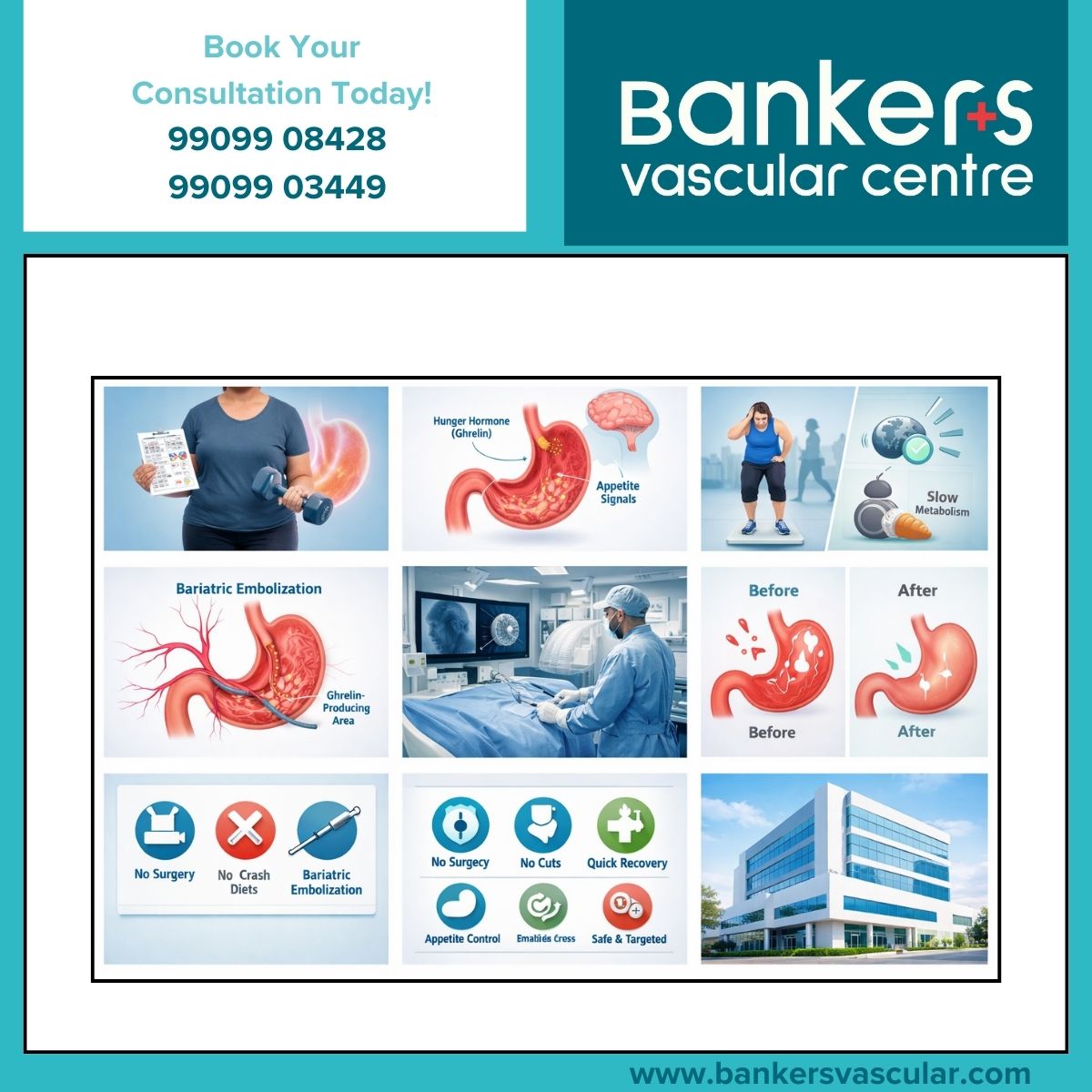
Why Diet & Exercise Don’t Work for Everyone
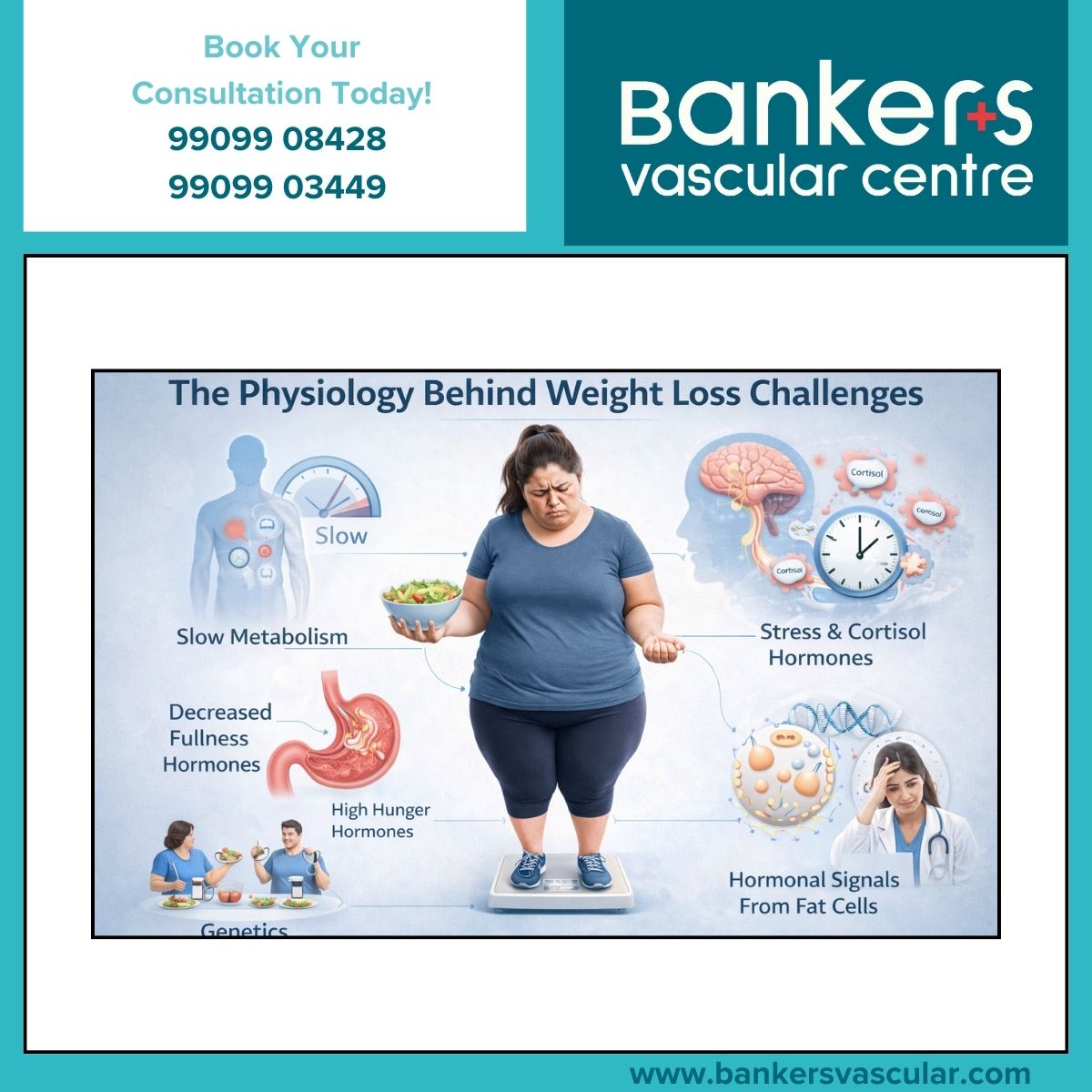
1. Hormones Control Hunger, Not Just Willpower
Your body’s hunger is regulated by hormones—especially ghrelin, known as the “hunger hormone.”
Some people naturally produce higher levels of ghrelin, making them feel hungry more often, even after meals.
➡️ Dieting alone cannot override strong hormonal hunger signals.
2. Metabolic Adaptation (The “Starvation Mode”)
When you restrict calories for a long time:
This survival mechanism makes long-term weight loss extremely difficult, even with exercise.
3. Genetic Predisposition
Research shows that genetics influence:
Some people are genetically programmed to store fat more easily, making weight loss harder despite lifestyle changes.
4. Insulin Resistance & Medical Conditions
Conditions like:
can prevent weight loss even with strict diet control.
5. Weight Regain Is Common
Studies show:
This is why obesity is now recognized as a chronic medical condition, not just a lifestyle issue.
What Is Bariatric Embolization?
Bariatric Embolization (also known as Gastric Artery Embolization) is a minimally invasive, non-surgical procedure that targets the root cause of hunger.
It is performed by interventional radiologists under imaging guidance.
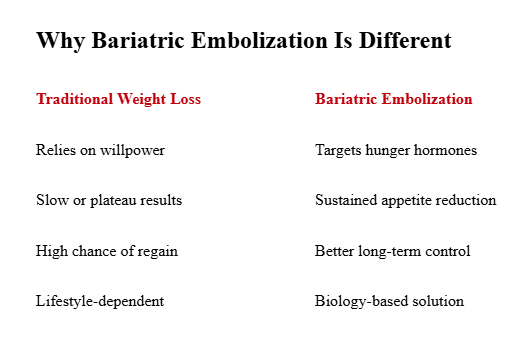
The Science behind Bariatric Embolization
How It Works:
➡️ Patients feel less hungry, eat smaller portions, and lose weight without surgery.
Who Can Benefit from Bariatric Embolization?
This procedure may be suitable for:
At Bankers Vascular Hospital, every patient undergoes thorough evaluation to ensure safety and effectiveness.

Advantages of Bariatric Embolization
✔ No surgery
✔ No stomach cutting or stapling
✔ No general anesthesia
✔ Minimal pain
✔ Same-day or next-day discharge
✔ Faster recovery
✔ Reduced appetite naturally
Bariatric Embolization at Bankers Vascular Hospital
At Bankers Vascular Hospital, we specialize in advanced, image-guided minimally invasive procedures.
Why Choose Bankers?
We believe obesity treatment should be scientific, safe, and sustainable—not blame-based.
Final Thoughts
If diet and exercise haven’t worked for you, it doesn’t mean you failed—your biology may be working against you.
Thanks to modern medical advances like Bariatric Embolization, weight loss is no longer just about willpower—it’s about science.
📍 Consult the experts at Bankers Vascular Hospital to explore non-surgical, science-backed solutions for weight loss.


Comments
Post a Comment