Overuse Syndromes in Daily Life
(Not Just Athletes)
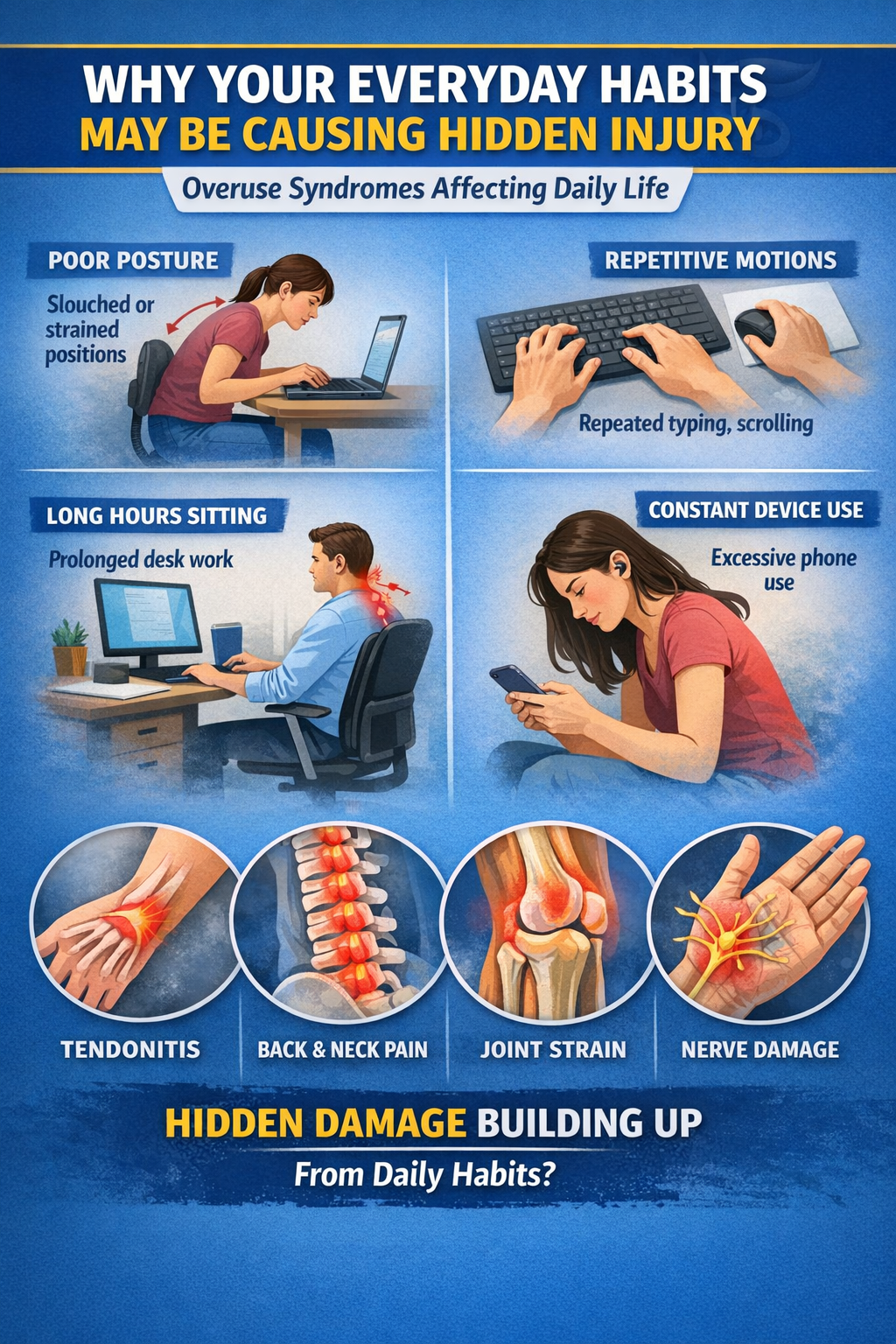
Why Your Everyday Habits May Be Causing Hidden Injury …….When people hear the term overuse injury, they usually think of athletes — runners with knee pain, tennis players with elbow issues, or cricketers with shoulder strain. But the truth is, overuse syndromes are increasingly common in everyday people — office workers, homemakers, drivers, bankers, teachers, and even students.
Modern lifestyle involves repetitive movements, long sitting hours, poor posture, and constant device use. Over time, these small repeated stresses can lead to pain, inflammation, and reduced function — even without any major injury.
Let’s understand what overuse syndromes are, how they develop, and how to prevent them.
✅ What Is an Overuse Syndrome?
An overuse syndrome happens when a tissue — muscle, tendon, ligament, nerve, or joint — is exposed to repetitive stress without enough recovery time. Instead of a sudden injury, the damage builds up slowly.
Think of it like bending a paper clip repeatedly — it doesn’t break at first, but eventually it weakens and snaps.
In the body, this leads to:
🧑💻 Why Non-Athletes Are Now at High Risk
Daily life today includes many repetitive and static activities:
Unlike athletes, most people don’t train their bodies to tolerate repetitive stress, which makes tissues more vulnerable.
🔍 Common Overuse Syndromes in Daily Life
1️⃣ Computer & Desk Work Related
Neck strain / Tech neck
Wrist tendinitis
Carpal tunnel syndrome
Shoulder impingement
2️⃣ Household Activity Related
Golfer’s elbow / Tennis elbow (not only in players)
Rotator cuff strain
Thumb tendinitis (De Quervain’s)
3️⃣ Walking & Standing Related
Plantar fasciitis
Achilles tendinitis
Knee overuse pain
4️⃣ Driving & Travel Related
Low back strain
Hip tightness
Neck and shoulder stiffness
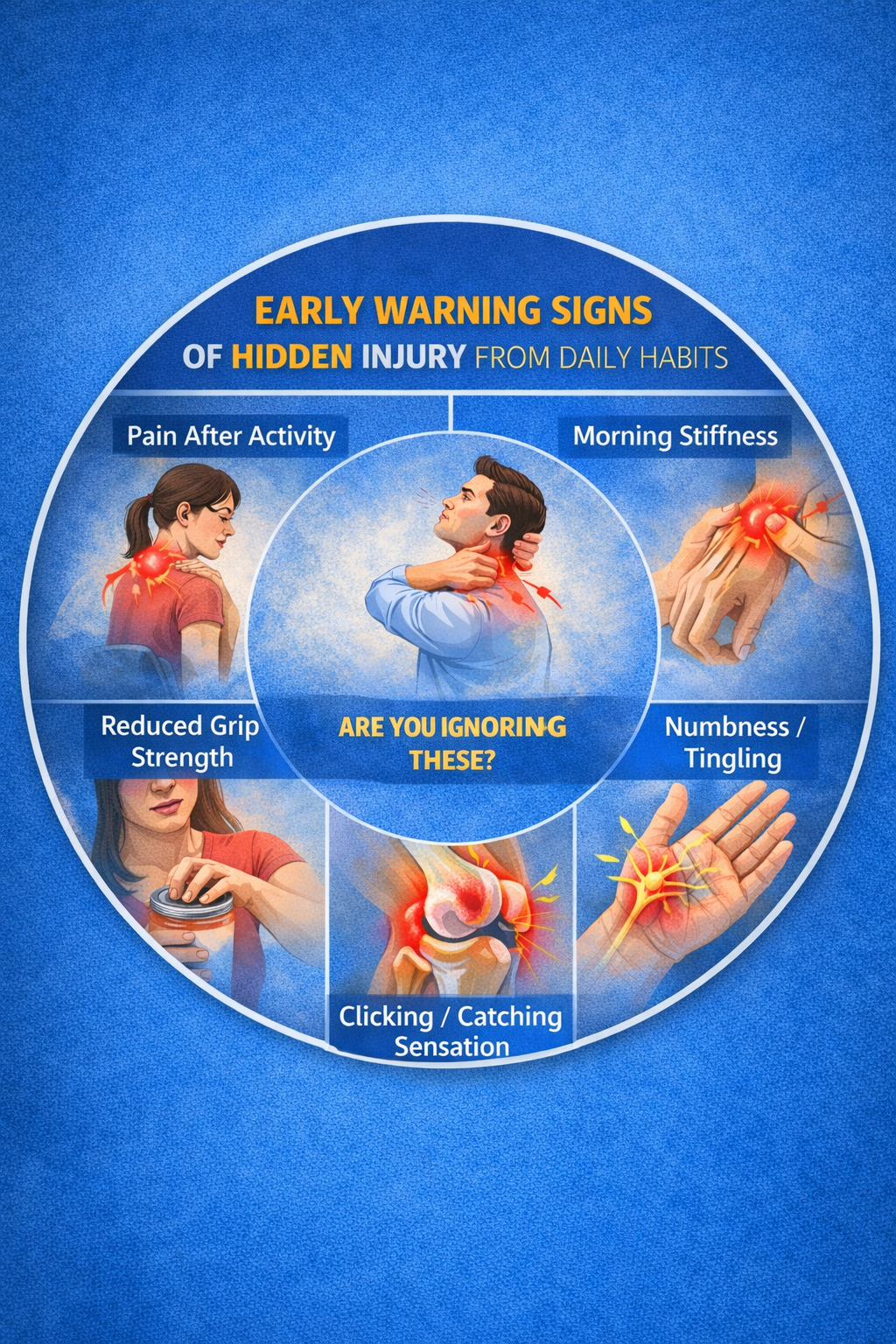
⚠️ Early Warning Signs People Ignore
Many people miss early symptoms until pain becomes severe.
Watch for:
Early management prevents chronic damage.
🧠 Why Rest Alone Is Not Enough
A common mistake is:
“I’ll just rest for a few days.”
While short rest helps, overuse syndromes usually require:
Without correcting the cause, pain often returns.
🏥 How Doctors Diagnose Overuse Syndromes
Diagnosis is usually clinical and may include:
The goal is not just to name the injury — but to identify the overload pattern.
🛠️ Treatment Options
Depending on severity:
Conservative care
Medical treatment
Advanced non-surgical options
Surgery is rarely needed when treated early.
🧘 Prevention: Simple Daily Protection Plan
You don’t need to be an athlete — but you should train like one in terms of recovery.
Follow the 5-R Rule:
📌 Workstation Quick Fix Checklist
💬 Final Takeaway
Overuse syndromes are no longer sports-only injuries. They are modern lifestyle injuries. The earlier you recognize symptoms, the easier they are to reverse.
Persistent pain is not “normal tiredness.” It is often your body asking for movement correction, not just medication.
🏥 When to Seek Expert Care
If pain lasts more than 2–3 weeks, affects daily activity, or keeps returning, proper evaluation is important. Centers with multidisciplinary pain and vascular expertise — such as Bankers Vascular Hospital — offer advanced diagnostic tools, physiotherapy guidance, and minimally invasive treatment options for chronic overuse and musculoskeletal pain conditions.
Early care prevents long-term disability.


Comments
Post a Comment