Non-Surgical Weight Loss: Is Bariatric Artery Embolization Safe ??
In recent years, medical science has been exploring less invasive alternatives to traditional bariatric surgery for weight loss. One such technique gaining attention is Bariatric Artery Embolization (BAE) — a catheter-based, non-surgical procedure that targets hormones influencing appetite. But how safe is it, and is it a real option for weight loss? Let’s break it down.
What Is Bariatric Artery Embolization?
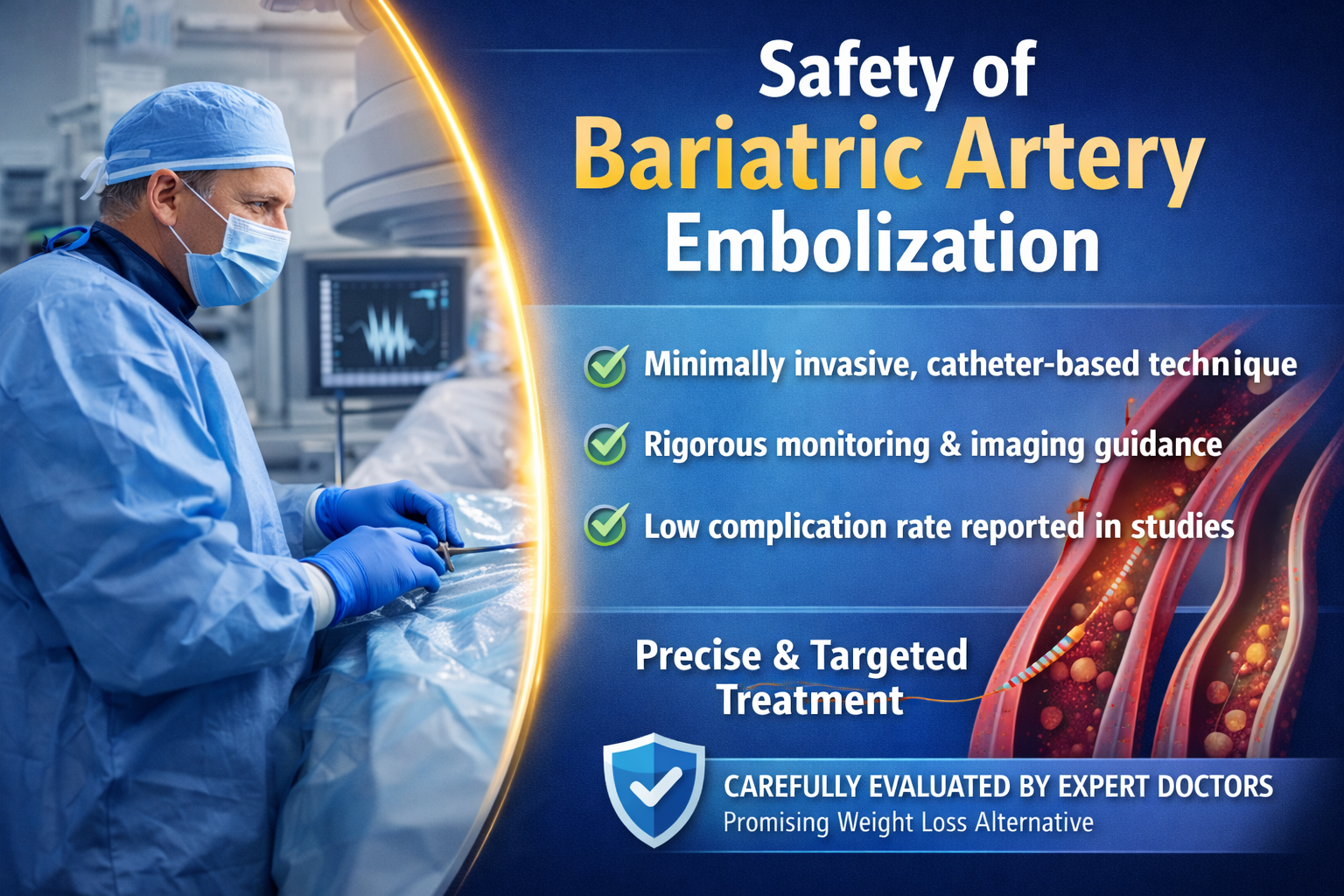
Bariatric artery embolization is a minimally invasive procedure performed by an interventional radiologist. A tiny catheter is threaded through an artery in the wrist or groin to reach the arteries supplying the upper part of the stomach. Microscopic particles are then released to block blood flow to these arteries, aiming to reduce production of the hunger hormone ghrelin — which is primarily made in the stomach’s fundus. RSNA+1
By reducing ghrelin levels, the body may experience:
Safety: What Do Studies Say?
Positive Early Results
Several clinical studies have shown that BAE:
In pilot trials like the BEAT Obesity study, participants tolerated the procedure well and saw significant appetite suppression and weight reduction for up to one year. PMC
Risks and Limitations
Despite early promise, BAE is not risk-free and remains investigational.
Common side effects include:
Limitations
BAE should be considered only after thorough evaluation by a qualified specialist and isn’t suitable for everyone.
How Bariatric Artery Embolization Works
The primary goal is to target the left gastric artery — the main blood supply to the part of the stomach that produces ghrelin. By reducing blood flow here, the production of this hunger hormone is suppressed, which may help naturally decrease appetite. RSNA
This mechanism is different from conventional bariatric surgeries that physically reduce stomach size or reroute the digestive tract.
Who It May Benefit
BAE might be a good option for:
However, it should not replace healthy lifestyle changes — including diet and exercise — which remain essential for long-term success.
Why Choose Bankers Vascular Hospital
At Bankers Vascular Hospital, we specialize in the latest minimally invasive procedures, including Bariatric Artery Embolization for qualifying patients: Bankers Vascular Centre
Why Patients Trust Us
If you’re exploring non-surgical weight loss solutions, our team can help you understand whether BAE is right for you — safely and effectively.
Book your consultation today and start your journey to healthier living!


Comments
Post a Comment