Non-Surgical Piles Treatment: Recovery Timeline Explained

Non-surgical treatments for piles aim to reduce inflammation, shrink swollen veins, and ease discomfort without the need for traditional surgery. These approaches are ideal for mild to moderate hemorrhoids and for patients seeking quicker recovery with minimal downtime.
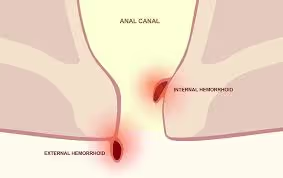
Common Non-Surgical Treatments for Piles

1. Medications

  • Topical creams & ointments (hydrocortisone, lidocaine)

  • Suppositories

  • Oral pain relievers

  • Flavonoid supplements (e.g., diosmin, hesperidin)

2. Lifestyle & Dietary Measures

  • High-fiber diet

  • Increased fluid intake

  • Sitz baths

  • Avoiding straining during bowel movements

  • Regular physical activity

3. Minimally Invasive (Non-Surgical) Procedures

These options require no major cuts and allow faster recovery than conventional surgery.

• Rubber Band Ligation (RBL)

A small rubber band is placed at the base of the hemorrhoid, cutting off its blood supply and causing it to shrink.

• Infrared Coagulation (IRC)

Infrared light is used to coagulate blood vessels and shrink the hemorrhoid.

• Sclerotherapy

A chemical solution is injected into the hemorrhoid to shrink it.

• Hemorrhoidal Artery Embolization (HAE) / Emborrhoid Technique

A highly effective, image-guided procedure where the interventional radiologist blocks the arterial blood flow to the hemorrhoids using tiny particles.
Benefits of HAE include:
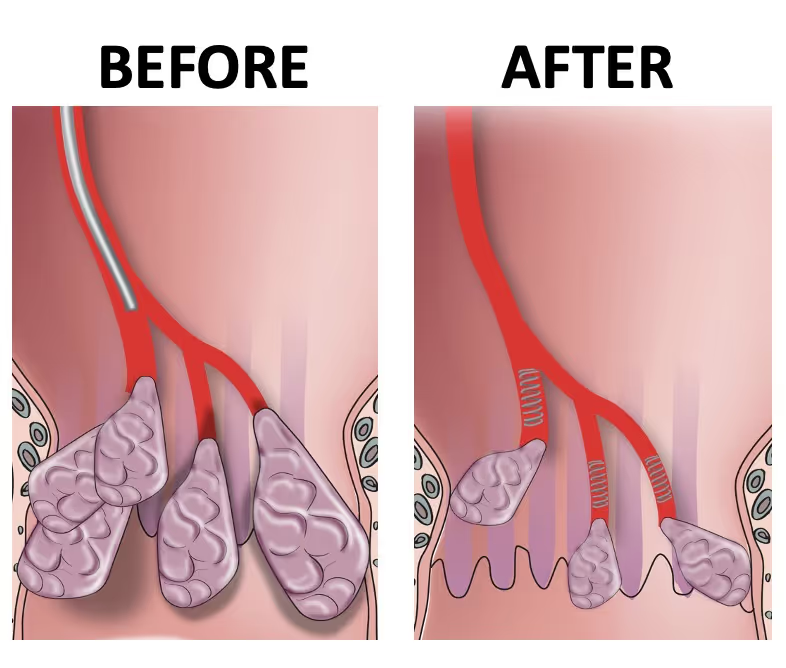
  • No incisions

  • Performed under local anesthesia or light sedation

  • Minimal pain

  • Very fast return to daily activities

  • Ideal for patients who want to avoid surgery or have bleeding piles

Recovery Timeline

Day 1–3

What to expect:

  • Mild discomfort, itching, or light bleeding may persist.

  • After RBL, IRC, sclerotherapy, or HAE, a feeling of fullness or pressure is common.

What to do:

  • Sitz baths 2–3 times daily

  • Use painkillers if needed

  • Eat fiber-rich meals + stool softeners

  • Maintain good hydration

Week 1

Improvements begin:

  • Pain reduces significantly

  • Swelling and bleeding decrease

  • If banding was done, the banded tissue may naturally detach

Continue:

  • Fiber intake

  • Enough water

  • Avoid straining or heavy lifting

Week 2

Symptoms improve further:

  • Burning and itching subside

  • Healing continues

  • Most people resume normal activities comfortably

Note:
Some minimally invasive procedures (including HAE) may be done in stages if multiple vessels or hemorrhoids need treatment.

Week 3–4

Near-complete or full recovery:

  • Hemorrhoids shrink or stop causing symptoms

  • Minor bleeding occasionally may occur, but usually resolves

Factors Affecting Recovery

  • Severity (Grade I–III recover faster than Grade IV)

  • Treatment type (HAE often provides the quickest comfort with minimal pain)

  • Diet and hydration

  • Constipation history

  • Physical activity levels

When to Contact a Doctor

  • Heavy or persistent bleeding

  • Severe pain unrelieved by medication

  • Fever or infection signs

  • No improvement after 4–6 weeks

Comments

Popular posts from this blog