Myths vs. Facts: Non-Surgical Joint Pain Management
Joint pain is one of the most common health problems affecting people of all ages. While many believe that surgery is the only permanent solution, advances in medical science now offer highly effective non-surgical treatments that reduce pain, improve mobility, and support long-term joint health.
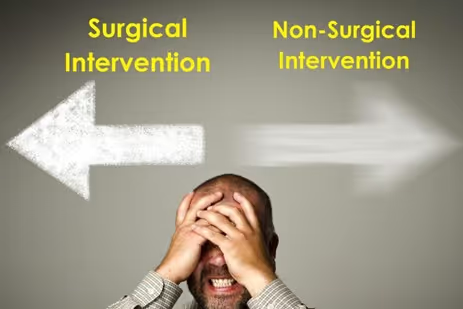
Below are the most common myths—and the real facts behind them.
Myth 1: Surgery is the only solution for chronic joint pain
Fact: Many patients recover successfully without surgery.
Modern techniques like Platelet-Rich Plasma (PRP) Therapy, regenerative injections, physiotherapy, vascular-based interventions, and image-guided joint procedures can significantly relieve pain and restore mobility. Surgery is recommended only when conservative approaches fail.
Myth 2: Pain-relief injections are harmful and provide only temporary results
Fact: When performed under ultrasound or fluoroscopy guidance, joint injections (PRP, hyaluronic acid, corticosteroid, ozone, etc.) are safe and targeted. They reduce inflammation and promote healing. Patients often experience long-term improvement when combined with strengthening exercises.
Myth 3: Bed rest is the best way to manage joint pain
Fact: Prolonged rest worsens stiffness and muscle weakness.
Controlled movement, physiotherapy, and strengthening rehab help reduce pain and improve joint function faster.
Myth 4: Only elderly people need non-surgical treatment
Fact: Joint pain affects athletes, working professionals, homemakers, and young adults due to injuries, posture issues, obesity, and lifestyle habits. Early non-surgical care prevents future degeneration.
Myth 5: Physiotherapy cannot treat severe joint pain
Fact: Physiotherapy plays a major role in recovery, improving muscle balance, flexibility, and joint stability. With proper guidance, many patients avoid surgery completely.
Myth 6: Knee replacement guarantees 100% success
Fact: While surgery helps some patients, it comes with recovery time, risks, and limitations. For many cases of arthritis, sports injury, bursitis, tendonitis, frozen shoulder, or early degeneration, non-surgical options offer excellent outcomes without major risks.
Benefits of Non-Surgical Joint Pain Management
When should you choose a non-surgical approach?
Choose non-surgical management if you experience:
Conclusion
Non-surgical joint pain management is a safe, effective, and modern alternative to surgery. With advanced therapies and individualized treatment plans, many patients achieve long-lasting relief, improved mobility, and a better quality of life.
Non-Surgical Joint Treatment at Bankers Vascular Hospital
Image-Guided Joint Injections
✔ Genicular artery Embolization
✔ Vascular-Based Joint Pain Management
✔ PRP & Regenerative Cell Therapy
✔ Personalized Treatment Approach


Comments
Post a Comment