Laser vs Injection vs Hemorrhoidal Artery Embolisation Treatment for Piles – What Patients Should Know

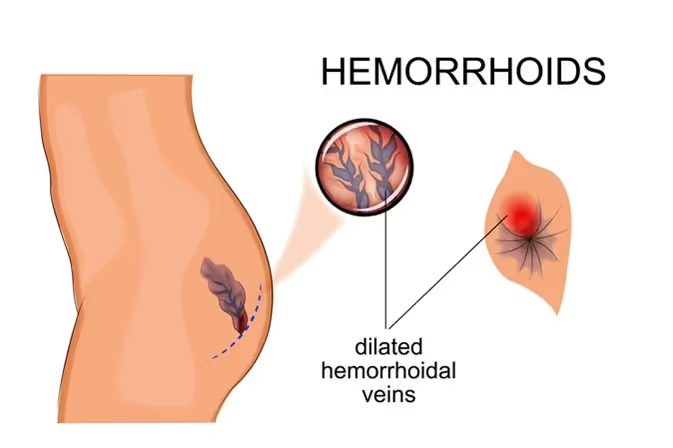
Piles (hemorrhoids) are swollen veins in the rectum or anus that cause pain, bleeding, itching, and discomfort. With modern advancements, several minimally invasive treatments are now available—Laser, Injection Therapy, and Hemorrhoidal Artery Embolisation (HAE).

Understanding Hemorrhoids

Before choosing a treatment, understanding what piles look like can help.
1. Laser Treatment for Piles

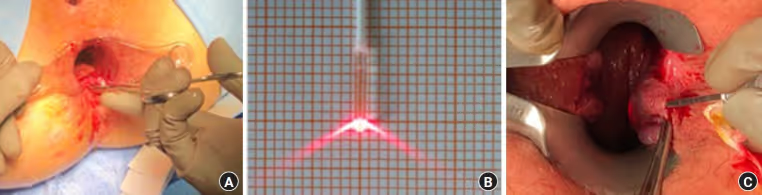
Laser hemorrhoidoplasty uses controlled laser energy to shrink the hemorrhoid from the inside.

How It Works

  • A thin laser fiber is inserted into the hemorrhoid.

  • Heat collapses the swollen vein.

  • Tissue shrinks over days.

Benefits

  • Minimal pain

  • Very little bleeding

  • 15–20 minute daycare procedure

  • Fast recovery (24–48 hours)

Limitations

  • Slightly higher cost

  • May not be suitable for very large external hemorrhoids

2. Injection Treatment (Sclerotherapy)

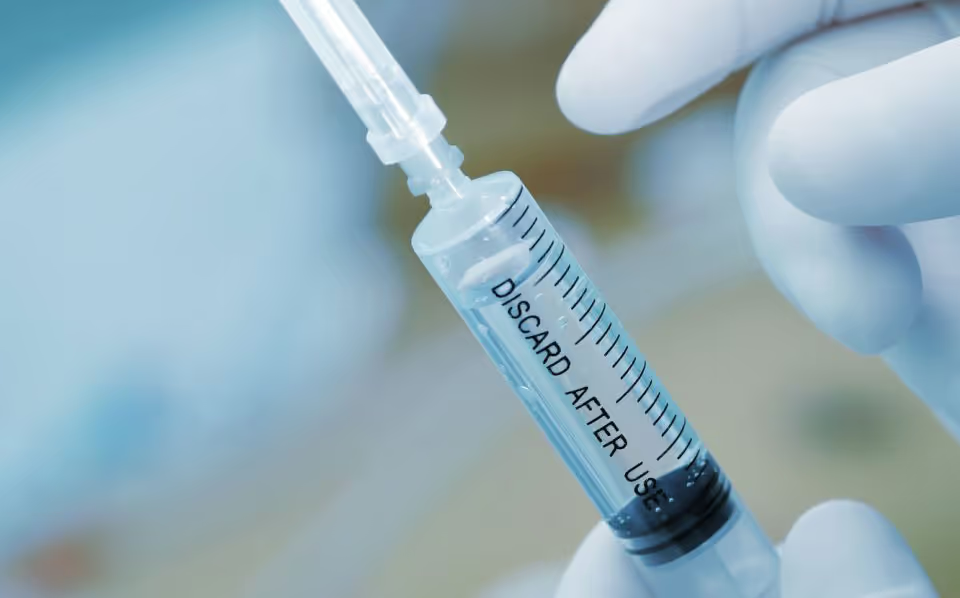
Sclerotherapy involves injecting a chemical solution into the hemorrhoid to shrink it.

How It Works

  • A sclerosant solution is injected.

  • It reduces blood supply.

  • Hemorrhoid shrinks over 2–7 days.

Benefits

  • Quick and inexpensive

  • No anesthesia required

  • Effective for early-stage piles (Grade 1–2)

Limitations

  • Not useful for advanced piles

  • May require repeated sessions

  • Temporary swelling or discomfort

3. Hemorrhoidal Artery Embolisation (HAE)

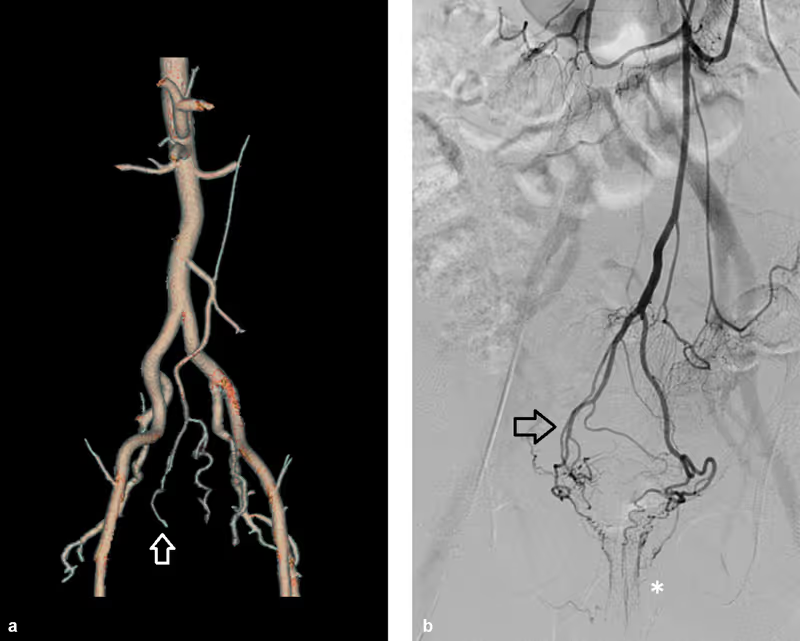
Also known as ‘Emborrhoid Technique’, HAE is a minimally invasive radiological procedure that cuts off the blood supply feeding the hemorrhoids.

How It Works

  • A tiny catheter is inserted through the artery in the wrist or groin.

  • Embolic particles block the arteries feeding hemorrhoids.

  • Hemorrhoids gradually shrink due to reduced blood flow.

Benefits

  • Suitable for recurrent or severe bleeding piles

  • No anal wound → less pain

  • Good option for older patients or those unfit for surgery

Limitations

  • Requires interventional radiology setup

  • More expensive than laser/injection

  • Not ideal for large external hemorrhoids

Comparison Table

Feature

Laser Treatment

Injection Therapy

HAE (Embolisation)

Pain

Minimal

Mild

Very minimal

Bleeding

Almost none

Minimal

None (no rectal wound)

Best For

Grade 2–3

Grade 1–2

Severe bleeding, recurrent piles

Procedure Time

15–20 min

10–15 min

45–60 min

Recovery

24–48 hours

1–3 days

1–2 days

Durability

High

Moderate

Very high

Cost

Medium–High

Low

Highest

Anaesthesia

Local/General

Not required

Local anaesthesia + mild sedation

Which Treatment Should You Choose?

Choose Laser if:

  • You have Grade 2–3 hemorrhoids

  • You want fast recovery and minimal discomfort

Choose Injection if:

  • You have early piles (Grade 1–2)

  • You need an economical, simple option

Choose HAE if:

  • You have repeated bleeding

  • You are older or not suitable for surgery

  • Previous treatments didn't work

Comments

Popular posts from this blog