Ignoring Bleeding During Toilet – When Is It Dangerous?
Seeing blood during or after passing stool is something many people silently ignore. Some assume it is “just piles.” Others feel embarrassed to talk about it. But the truth is — rectal bleeding should never be ignored without understanding the cause.
Sometimes it may be a minor issue. Sometimes it can be a warning sign of something serious.
Let’s understand when bleeding during the toilet is dangerous and when you must consult a specialist.
What Does Bleeding During Toilet Mean?
Bleeding while passing stool usually appears as:
The color and pattern of bleeding often give clues about the cause.
Common Causes of Bleeding During Toilet
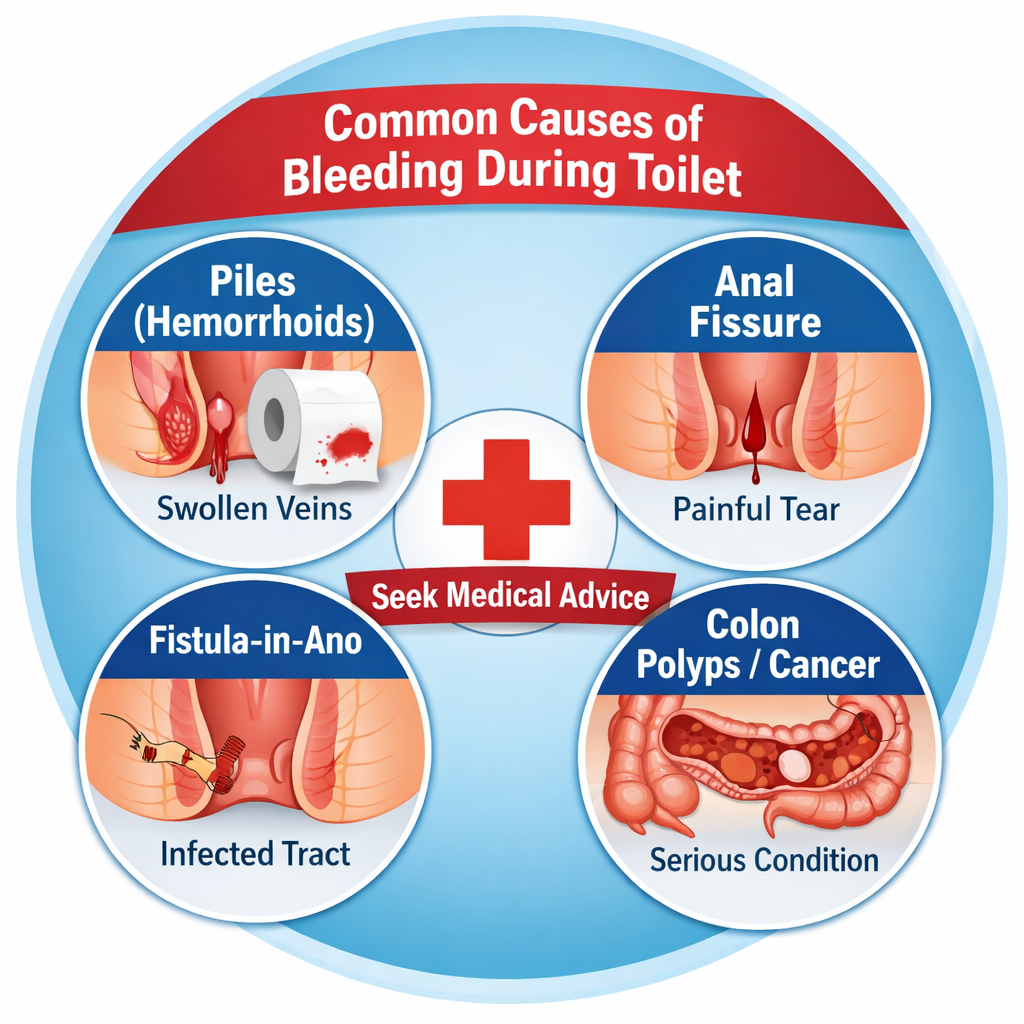
1️⃣ Piles (Hemorrhoids)
The most common reason is hemorrhoids — swollen veins in the anal region.
Piles are common, but repeated bleeding can lead to anemia if ignored.
2️⃣ Anal Fissure
An anal fissure is a small tear in the lining of the anus.
Unlike piles, fissures are extremely painful.
3️⃣ Fistula-in-Ano
An anal fistula is an abnormal tract between the anal canal and skin.
This condition usually requires medical treatment.
4️⃣ Colon Polyps or Colorectal Cancer
This is where things become serious.
Bleeding can sometimes be due to polyps or even colorectal cancer. Warning signs include:
According to global cancer data, colorectal cancer is among the leading causes of cancer-related deaths worldwide — but early detection makes it highly treatable.
When Is Bleeding Dangerous?
You should NOT ignore bleeding if:
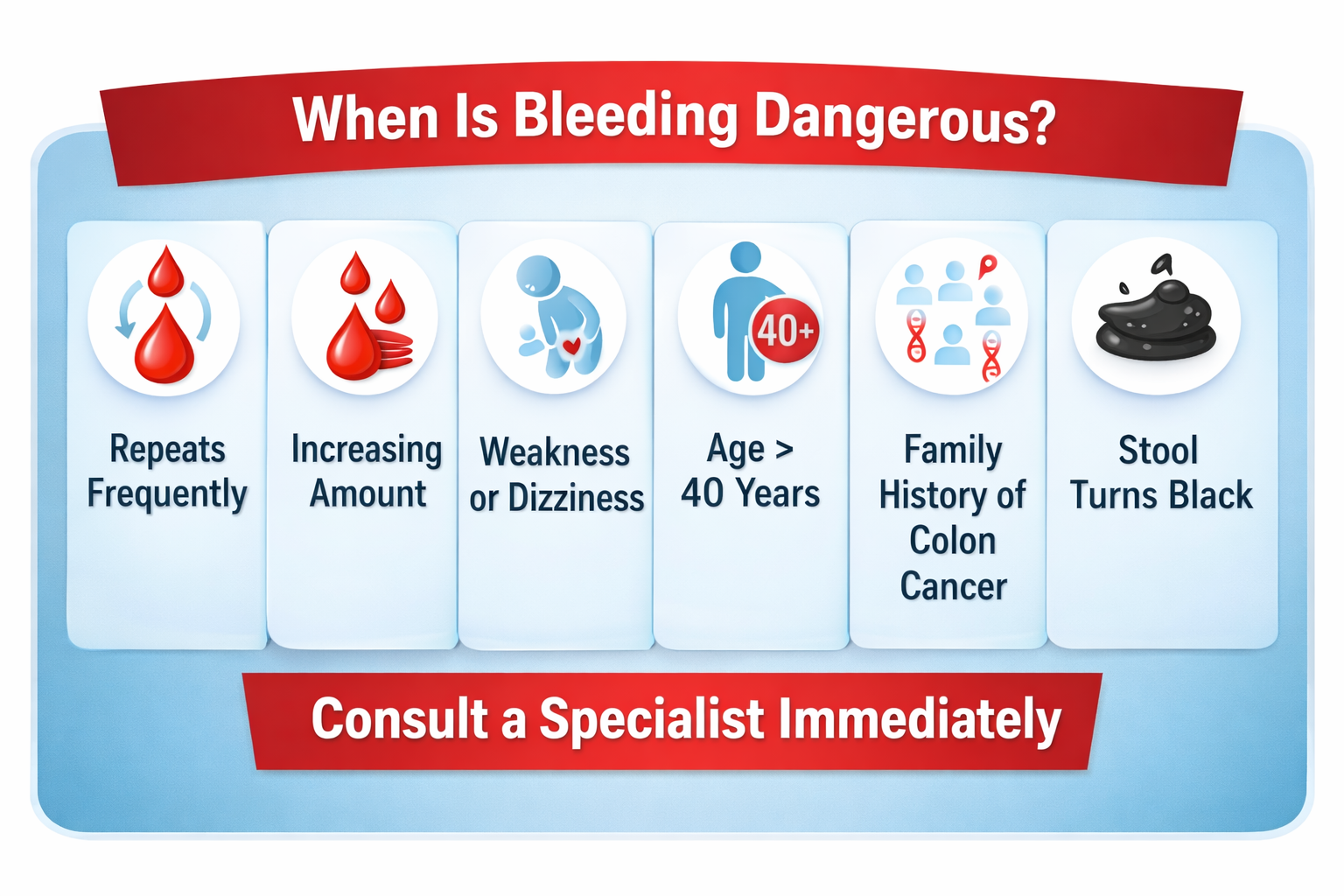
These situations require urgent evaluation.
Why Self-Diagnosis Is Risky
Many patients assume, “It’s just piles,” and start using over-the-counter creams.
This delay can be dangerous.
Not every bleeding episode is piles. Treating blindly without proper diagnosis can allow serious conditions to progress silently.
A proper evaluation may include:
Early Diagnosis Saves Lives
The earlier the diagnosis:
In modern medicine, many anorectal conditions can now be treated with minimally invasive techniques, ensuring less pain and faster return to daily life.
Don’t Let Embarrassment Delay Treatment
Rectal bleeding is a medical symptom — not something to feel ashamed about. Doctors deal with such issues daily.
Ignoring it won’t make it disappear.
Getting evaluated can give peace of mind — or early treatment if needed.
Final Takeaway
Bleeding during the toilet may be minor.
But it can also be a warning sign of something serious.
If bleeding is recurrent, painful, increasing, or associated with other symptoms — consult a specialist immediately.
Your health is too important to ignore.
🏥 About Bankers Vascular Hospital
At Bankers Vascular Hospital, Ahmedabad, we specialize in advanced, minimally invasive treatment for piles, fissures, fistula, and other colorectal conditions. Our expert team focuses on accurate diagnosis and personalized care to ensure safe and effective treatment.
If you or your loved one is experiencing bleeding during the toilet, don’t delay evaluation.
Early consultation can prevent serious complications.


Comments
Post a Comment