“Golfer’s Elbow Isn’t Just for Golfers—Here’s Why
Golfer’s elbow is a degenerative tendon condition, not just a temporary injury. Understanding what’s happening inside the elbow helps explain why the pain can linger—and why some cases become chronic.
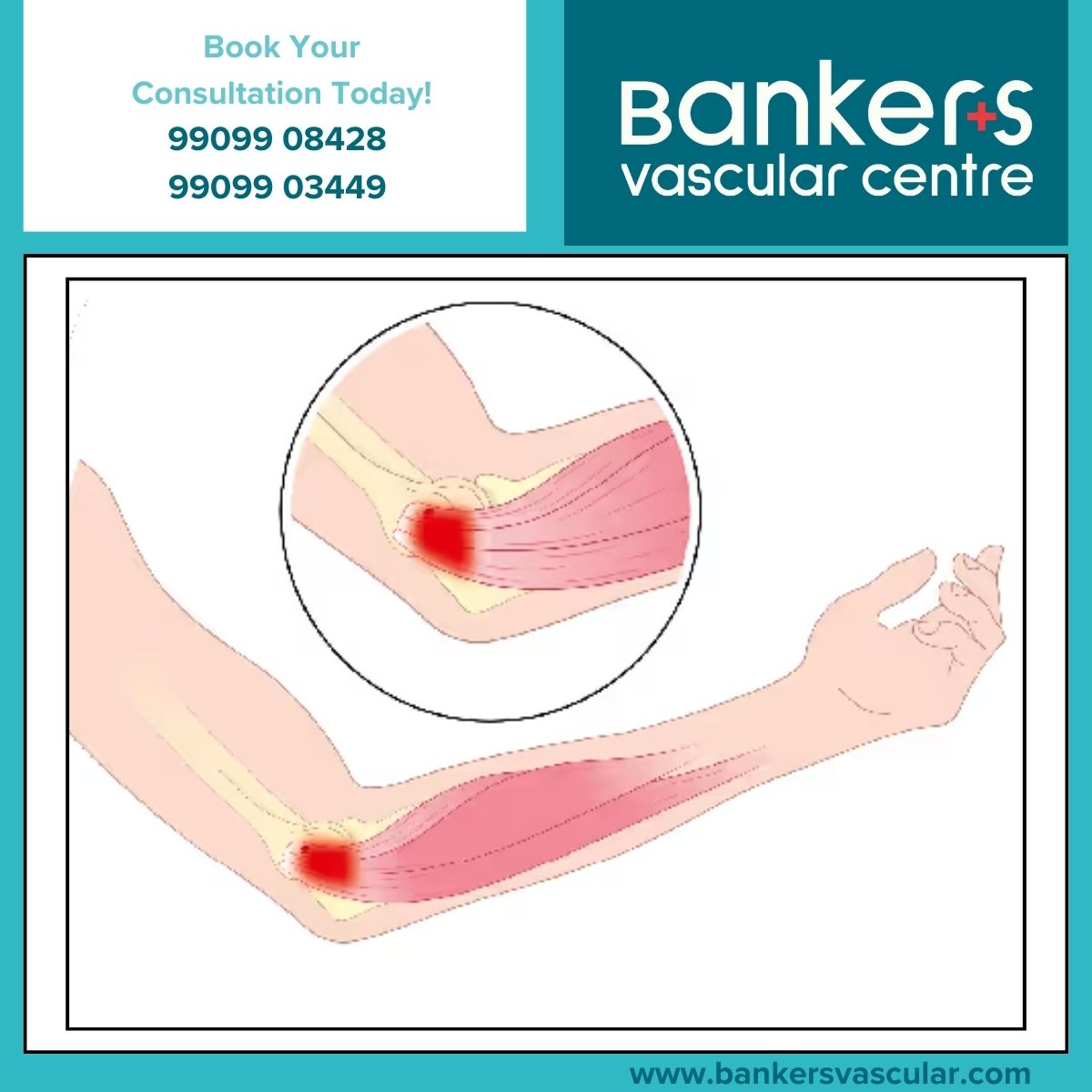
Anatomy: What’s Actually Affected?
Golfer’s elbow involves the medial epicondyle, the bony bump on the inner side of the elbow. Several forearm muscles attach here through a shared tendon, including muscles responsible for:
Muscles Involved in Golfer’s Elbow (and What They Do)
Golfer’s elbow affects a group of muscles known as the forearm flexor–pronator mass. These muscles originate from the medial epicondyle on the inner side of the elbow and work together to control wrist, hand, and forearm movements.
Because these muscles are used constantly in daily activities, they are especially vulnerable to overuse.
Key Muscles Affected in Golfer’s Elbow
1. Pronator Teres
Primary actions:
Why it matters:
This muscle is heavily used in repetitive twisting motions such as turning tools, opening jars, or typing. Overuse places stress directly on the medial epicondyle.
2. Flexor Carpi Radialis
Primary actions:
Why it matters:
Activities like lifting objects, gripping weights, or repetitive wrist bending strongly activate this muscle, increasing tendon strain.
3. Flexor Carpi Ulnaris
Primary actions:
Why it matters:
This muscle helps stabilize the wrist during gripping and forceful movements, making it a frequent contributor to tendon overload.
4. Flexor Digitorum Superficialis
Primary actions:
Why it matters:
Any activity involving prolonged gripping—such as carrying bags, using tools, or holding a phone—can overwork this muscle.
5. Palmaris Longus (absent in some people)
Primary actions:
Why it matters:
Although small, it contributes to repetitive wrist flexion and adds cumulative stress to the tendon attachment.
How These Muscles Work Together
These muscles rarely work in isolation. Everyday actions like:
require combined wrist flexion, finger flexion, and forearm rotation. Repeating these movements without enough recovery leads to micro-damage at the tendon origin.
Why Muscle Overload Leads to Pain
When the flexor–pronator muscles are:
they pull repeatedly on the medial epicondyle. Over time, this causes:
This is the foundation of chronic golfer’s elbow.
Clinical Importance of Muscle Knowledge
Understanding which muscles are involved helps guide:
Why This Matters for Recovery
Effective treatment isn’t just about resting the elbow—it’s about:
This muscle-specific approach improves long-term outcomes and reduces recurrence.
Is Golfer’s Elbow Really “Inflammation”?
Despite the name medial epicondylitis, long-standing golfer’s elbow is not purely inflammatory.
In early stages:
In chronic stages:
This explains why anti-inflammatory treatments alone often stop working in long-term cases.
How Golfer’s Elbow Develops Over Time
Golfer’s elbow usually progresses through stages:
Stage 1: Overuse and Strain
Stage 2: Tendon Degeneration
Stage 3: Chronic Pain
Early intervention can prevent progression to later stages.
Common Causes and Risk Factors
Golfer’s elbow develops when the load placed on the tendon exceeds its ability to recover.
Activity-Related Causes
Lifestyle and Mechanical Factors
Even non-athletic habits—like holding a phone or mouse for hours—can contribute.
How Golfer’s Elbow Is Diagnosed
Diagnosis is usually clinical, based on history and physical exam.
Physical Examination
Imaging (When Needed)
Imaging is often used when symptoms persist or before advanced treatments like embolization.
Golfer’s Elbow vs. Tennis Elbow
Though often confused, these conditions affect opposite sides of the elbow.
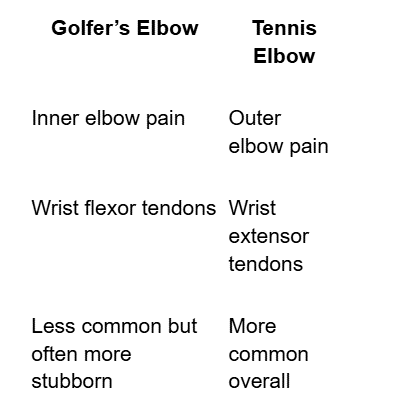
Both are overuse injuries but require slightly different rehab approaches.
Why Golfer’s Elbow Can Be So Hard to Treat
Tendons have limited blood supply, which slows healing. Continued daily use—even during “rest”—can keep re-injuring the tendon.
In chronic cases:
This is why newer treatments, like Golfer’s Elbow Embolization, focus on addressing abnormal blood vessels rather than just resting the tendon.
Common Myths About Golfer’s Elbow
Myth 1: Only athletes get it
Reality: Most patients are non-athletes.
Myth 2: Rest alone will cure it
Reality: Rest helps early but often isn’t enough for chronic cases.
Myth 3: Surgery is the only next step
Reality: Minimally invasive options now exist between therapy and surgery.
Why Education Matters
Understanding golfer’s elbow empowers patients to:
Early action often means simpler treatment—and better outcomes.
Standard Treatment Options (and Their Limits)
First-Line Treatments
Most people start with conservative care, such as:
These treatments are often effective, especially when started early.
When Pain Becomes Chronic
For some patients, symptoms persist for months or even years, despite doing everything “right.” This is often because chronic tendon pain behaves differently than acute inflammation.
Instead of healing, the tendon develops:
This is where newer treatments come in.
Golfer’s Elbow Embolization: An Advanced Treatment Option
What Is Golfer’s Elbow Embolization?
Golfer’s elbow embolization is a minimally invasive, image-guided procedure designed to treat chronic tendon pain by addressing its underlying cause—abnormal blood flow.
In long-standing golfer’s elbow, the body creates extra tiny blood vessels around the damaged tendon. These vessels continuously feed inflammation and pain.
Embolization works by:
How the Procedure Works
The procedure typically takes under an hour and does not involve surgery.
Benefits of Golfer’s Elbow Embolization
Many patients report gradual improvement over several weeks, with continued gains over time.
Who Is a Good Candidate?
Golfer’s elbow embolization may be considered for patients who:
A thorough evaluation is necessary to determine suitability.
Recovery and Aftercare
Recovery is usually quicker than surgical options:
Following post-procedure instructions is important for best results.
How It Compares to Surgery
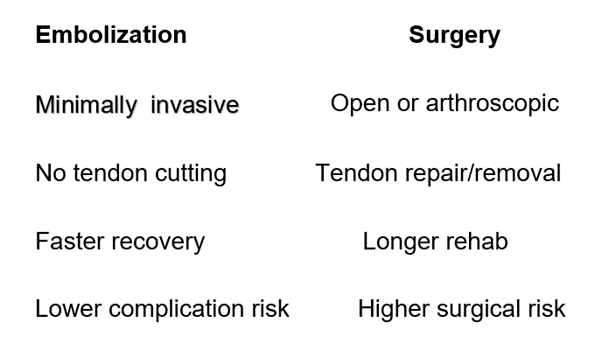
For many patients, embolization offers a middle ground between conservative care and surgery.
The Bottom Line
Golfer’s elbow is not just a sports injury—it’s a modern overuse problem affecting people of all ages and lifestyles. While many cases resolve with traditional treatment, chronic pain doesn’t have to be permanent.
With advances like Golfer’s Elbow Embolization, patients now have access to innovative, less invasive options that address pain at its source.
If elbow pain is holding you back, understanding all available treatments is the first step toward lasting relief.


Comments
Post a Comment