Cyclical vs Noncyclical Breast Pain: Understanding the Differences
Breast pain, also known as mastalgia, is a common concern among women and can occur at any age. While breast pain is often not linked to serious disease, understanding its type and cause is important for proper management and peace of mind. Breast pain is generally classified into cyclical and noncyclical pain.
What Is Breast Pain?
Breast pain refers to discomfort, tenderness, or aching in one or both breasts. It may range from mild to severe and can be constant or intermittent. Although many people fear breast cancer when experiencing pain, breast pain alone is rarely a sign of cancer.
Cyclical Breast Pain
What Is Cyclical Breast Pain?
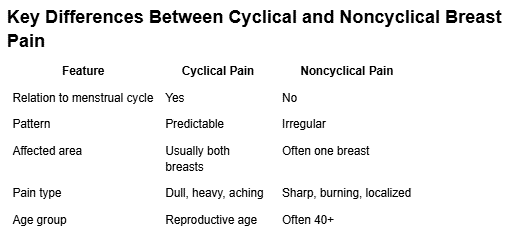
Cyclical breast pain is linked to hormonal changes during the menstrual cycle. It typically occurs in the days leading up to menstruation and improves once the period begins.
Key Characteristics
Common Causes
Who Is Affected?
Cyclical breast pain most commonly affects women between 20 and 40 years of age and is rare after menopause unless hormone therapy is used.
Noncyclical Breast Pain
What Is Noncyclical Breast Pain?
Noncyclical breast pain is not related to the menstrual cycle and does not follow a predictable pattern. It may be constant or come and go without a clear hormonal link.
Key Characteristics
Common Causes
Who Is Affected?
Noncyclical breast pain is more common in women aged 40 and older, including postmenopausal women.
When to See a Doctor
Although breast pain is usually benign, medical evaluation is recommended if you notice:
Prompt evaluation helps rule out serious conditions and ensures proper treatment.
Managing Breast Pain
Self-Care Measures
Medical Treatment
Treatment depends on the cause and severity of the pain.


Comments
Post a Comment