Common Myths About Non-Surgical Fibroid Treatment — Busted by a Vascular Specialist
Uterine fibroids are common — affecting up to 70–80% of people with a uterus by age 50 — yet myths and misconceptions still surround modern treatment options. At bankers vascular hospital we regularly guide patients through non-surgical approaches like Uterine Fibroid Embolization (UFE). Let’s separate fact from fiction.
MYTH 1: Non-surgical treatments aren’t as effective as surgery
FACT:
Non-surgical options such as Uterine Fibroid Embolization have been shown in multiple studies to significantly reduce symptoms (bleeding, pain, bulk symptoms) with high patient satisfaction. While hysterectomy completely removes the uterus, UFE treats the fibroids themselves without major surgery — and many patients experience durable relief. Long-term symptom improvement is comparable for appropriate candidates.
Surgical effectiveness is not the only benchmark — quality of life matters.
MYTH 2: You can’t have children after non-surgical fibroid treatment
FACT:
This is a major misconception. Many patients conceive and have successful pregnancies after UFE. That said — fertility outcomes may vary based on individual factors (age, existing fertility issues, fibroid location). A reproductive specialist should always be part of counselling if fertility is a priority.
Non-surgical ≠ infertility.
MYTH 3: Non-surgical treatments are only for small fibroids
FACT:
UFE isn’t limited by fibroid size. It can treat multiple and large fibroids effectively. The key consideration is symptom burden, not just size. Patients with complex or very large fibroids should have individualized assessment, but size alone isn’t an exclusion.
Size doesn’t automatically rule out non-surgical options.
MYTH 4: Recovery is slower than surgery
FACT:
Recovery from UFE is typically faster and less painful compared to abdominal surgery. Most patients are up and around within a day or two and return to normal activities within about a week — without the scars or complications that can come with major surgery.
Minimally invasive = faster recovery.
MYTH 5: Fibroids always come back after non-surgical treatment
FACT:
Recurrence can occur with any treatment — surgery or non-surgical. However, recurrence after UFE is relatively low and most patients have long-lasting relief. For those with recurrent symptoms years later, additional treatment options exist.
Recurrence is possible, but not inevitable.
MYTH 6: Non-surgical options are only for women who can’t undergo surgery
FACT:
Many patients choose non-surgical treatments by preference, not necessity. Factors like avoiding hospital stays, preserving fertility, reducing downtime, or avoiding general anesthesia make UFE a good choice for many otherwise healthy individuals.
It’s a legitimate first-line option for suitable candidates.
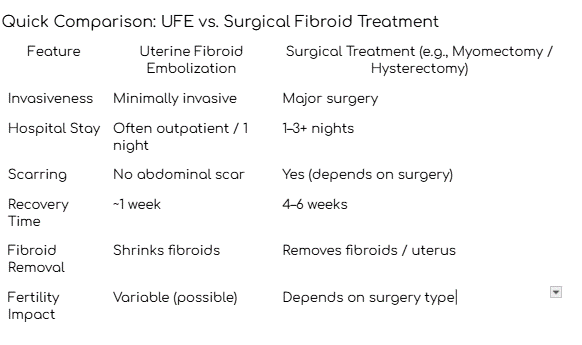
Quick Comparison: UFE vs. Surgical Fibroid Treatment
Who is a Candidate for Non-Surgical Treatment?
Non-surgical fibroid treatment may be a good option if you:
✔ Have heavy menstrual bleeding
✔ Experience pelvic pain, bloating, or pressure
✔ Want a shorter recovery time
✔ Prefer to avoid major surgery
✔ Are seeking uterine preservation
A full evaluation — including imaging and medical history — helps determine the best personalized treatment plan.
Non-surgical fibroid treatments like Uterine Fibroid Embolization are safe, effective, and evidence-based options for many people. Don’t let myths deter you — consult a specialist to understand what’s right for your health goals.


Comments
Post a Comment