Can Diabetic or Hypertensive Patients Undergo GAE?
Genicular Artery Embolization (GAE) is emerging as a breakthrough, minimally invasive treatment for knee osteoarthritis. But one of the most common questions we hear in clinical practice is:
“Can patients with diabetes or high blood pressure safely undergo GAE?”
The short answer is — yes, in most cases they can.
However, proper evaluation and control of these conditions are essential before the procedure.
Let’s understand this in detail.
What is GAE?
Genicular Artery Embolization is a minimally invasive interventional radiology procedure designed to reduce chronic knee pain caused by osteoarthritis.
It works by:
Unlike knee replacement surgery, GAE:
This makes it especially attractive for patients with medical comorbidities like diabetes and hypertension.
Can Diabetic Patients Undergo GAE?
Yes — most diabetic patients can safely undergo GAE, provided their blood sugar levels are reasonably controlled.
Why Diabetes Matters
Diabetes can affect:
Since GAE involves catheter insertion (usually from the wrist or groin) and contrast dye, doctors must evaluate:
✔ Blood sugar control (HbA1c levels)
✔ Kidney function (important because contrast is used)
✔ Risk of infection
✔ Overall cardiovascular health
When Is It Safe?
GAE is generally safe when:
Advantages for Diabetic Patients
Compared to open knee surgery, GAE:
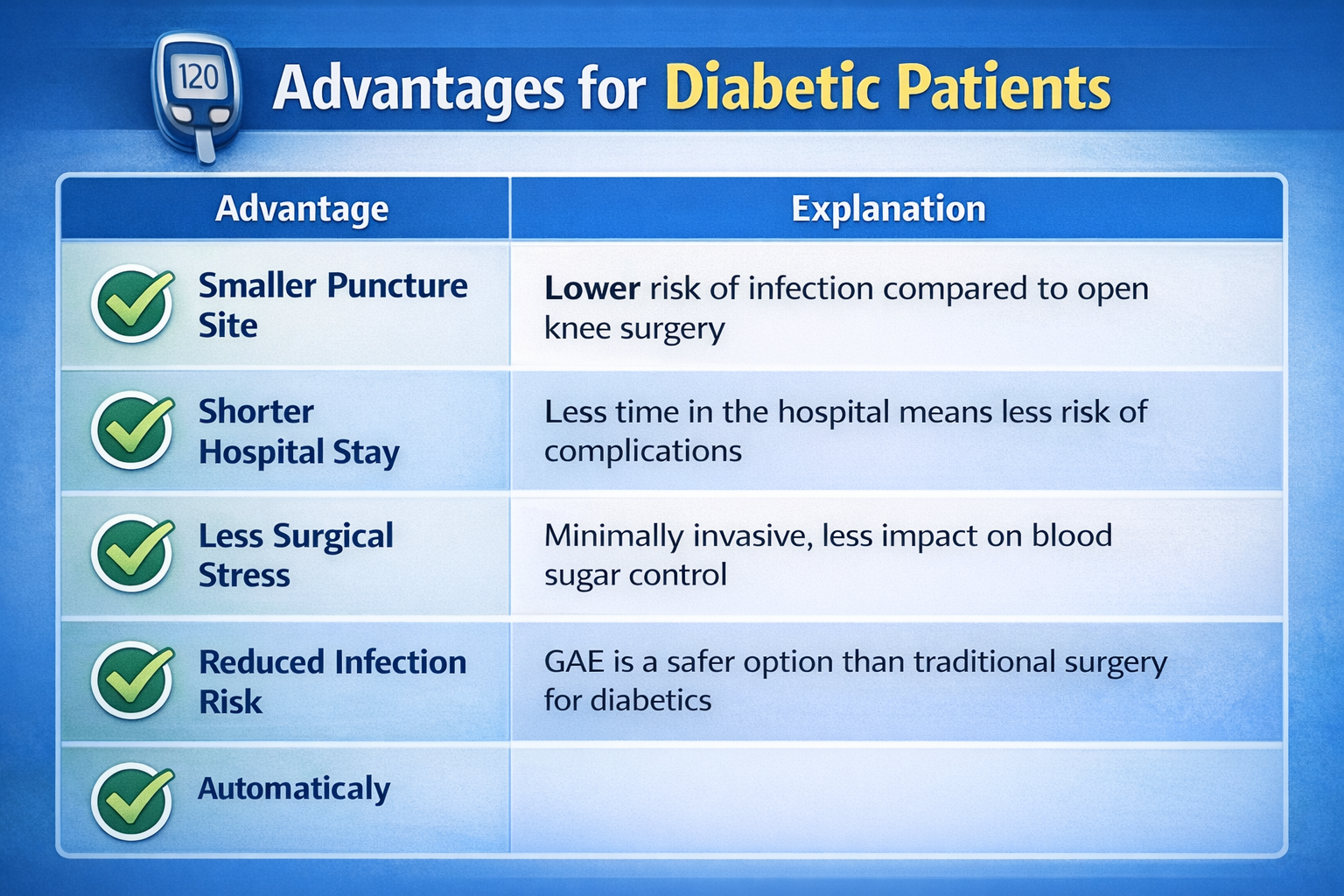
For diabetic patients who may not be ideal candidates for major surgery, GAE can be a safer alternative.
Can Hypertensive Patients Undergo GAE?
Yes — patients with high blood pressure can also undergo GAE, as long as their blood pressure is controlled.
Why Blood Pressure Control Is Important
Uncontrolled hypertension can increase:
Before GAE, doctors ensure:
✔ Blood pressure is within acceptable range
✔ Cardiac evaluation is done if needed
✔ Medications are optimized
Is GAE Risky for Heart Patients?
Since GAE is:
It places far less strain on the heart compared to knee replacement surgery.
For many hypertensive or elderly patients, this becomes a major advantage.
When Should GAE Be Postponed?
GAE may be delayed if:
In such cases, doctors first stabilize the condition and then plan the procedure safely.
Pre-Procedure Evaluation is the Key
Before GAE, patients typically undergo:
This ensures the procedure is customized and safe for each individual.
Why GAE Is a Good Option for High-Risk Patients
For patients who:
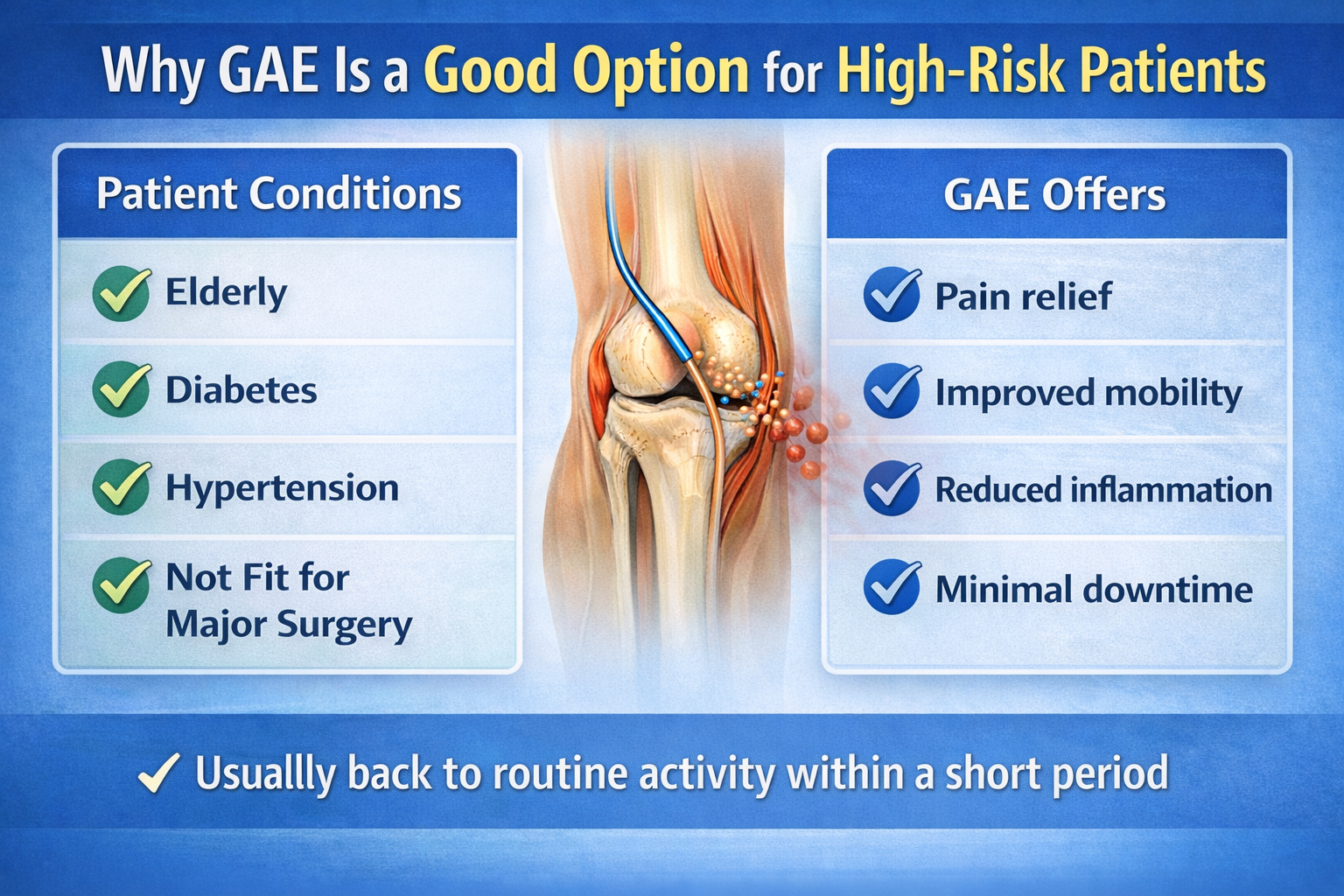
Most patients walk the same day and resume routine activity within a short period.
Final Takeaway
Being diabetic or hypertensive does not automatically disqualify you from undergoing GAE.
The most important factor is how well your condition is controlled. With proper evaluation, medication optimization, and expert supervision, GAE can be safely performed in most such patients.
If you are suffering from chronic knee pain and also have diabetes or high blood pressure, don’t assume surgery is your only option. A minimally invasive solution may be available.
About Bankers Vascular Hospital
At Bankers Vascular Hospital, Ahmedabad, our team of expert interventional radiologists specializes in advanced, minimally invasive procedures like Genicular Artery Embolization.
We carefully evaluate diabetic and hypertensive patients to ensure maximum safety and optimal outcomes. With state-of-the-art imaging technology and personalized care protocols, we provide effective knee pain relief without major surgery.
If you or your loved ones are struggling with knee osteoarthritis along with medical conditions like diabetes or hypertension, consult our specialists to explore whether GAE is the right option for you.


Comments
Post a Comment