UTERINE FIBROIDS
What areuterine fibroids?
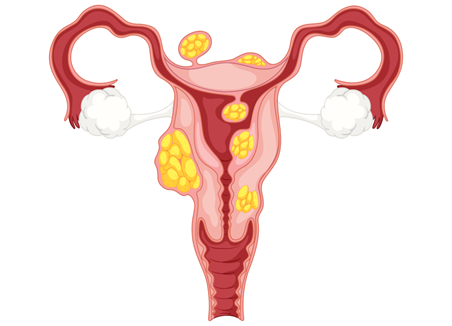
Uterinefibroids (also called leiomyomas) are growths made of muscle and tissue thatform in or on the wall of your uterus. These growths are usually notcancerous (benign) and are the most common noncancerous tumor in females.
Where dofibroids grow?
Fibroids cangrow as a single nodule (one growth) or in a cluster. Clusters of fibroids canrange in size from 1 millimeter to more than 20 centimeters (8 inches) indiameter or even larger. For comparison, fibroids can be as small as a seed orget as large as a watermelon. These growths can develop within the wall of youruterus, inside the main cavity of your uterus or on the outer surface of youruterus.
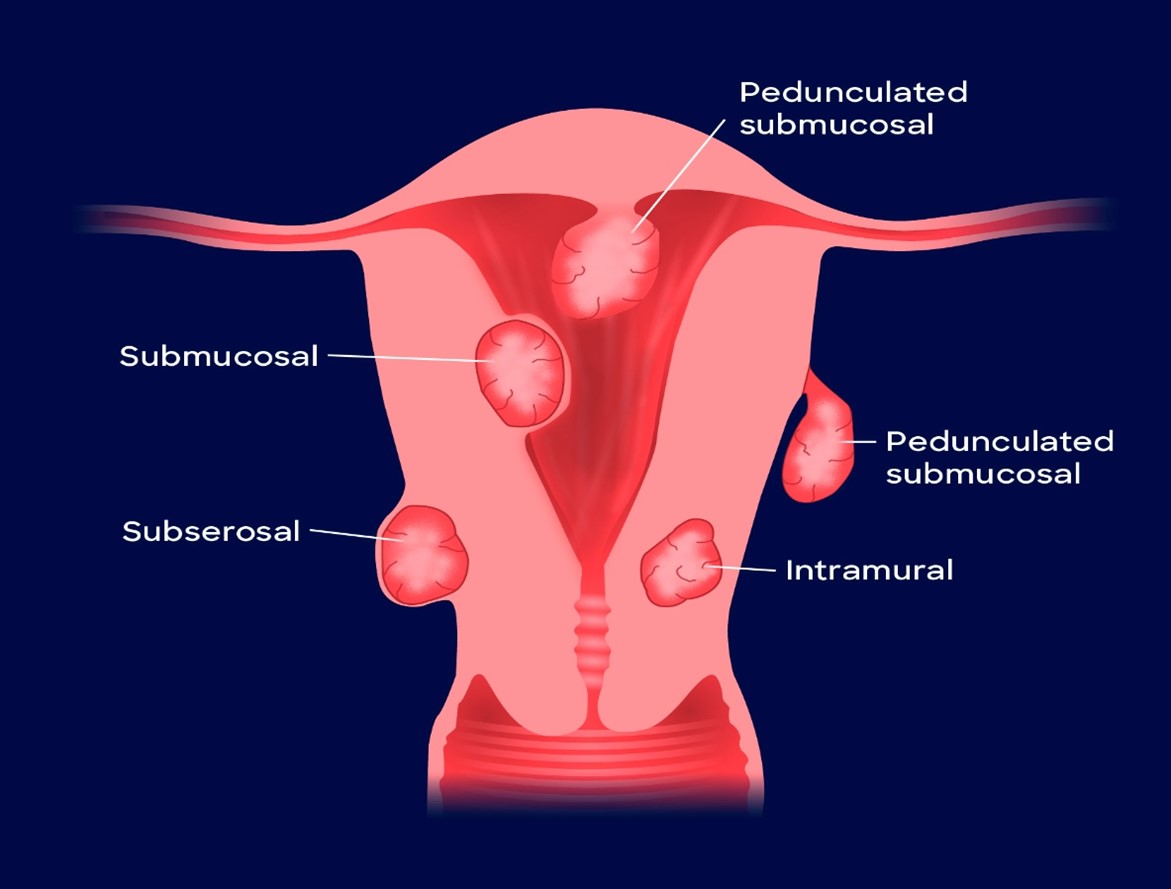
Types ofuterine fibroids
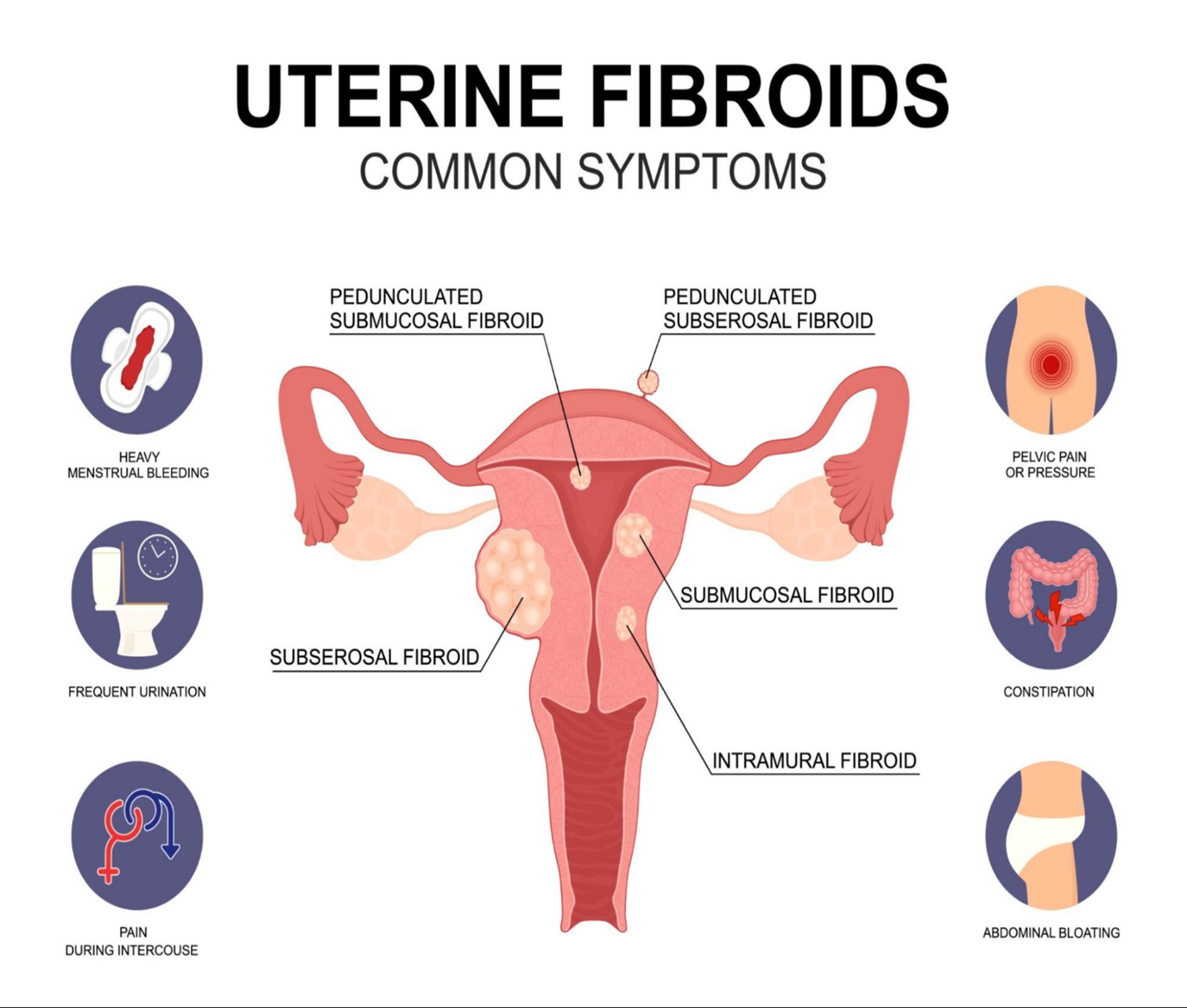
There aredifferent types of uterine fibroids depending on where they’re located and howthey attach. Specific types of uterine fibroids include:
Arefibroids common?
Fibroids are a very common type of growth.Approximately 40% to 80% of people with a uterus have fibroids. They occur mostoften in people between 30 and 50 years old. People who haven’t had their firstperiod (menstruation) yet typically don’t have fibroids.
They’re alsoless common in people who’ve entered menopause.
Whatcauses uterine fibroids?
The exact cause is unknown, but healthcareproviders believe the hormonesestrogenandprogesteron play a
role. Mostfibroids happen in people of reproductive age. Studies show that fibroids tendto grow when hormone levels are higher (like during pregnancy) and shrink whenhormone levels are low (like during the transition to menopause).
How areuterine fibroids diagnosed?
· USG
· MRI
· CT SCAN
· HYSTEROSCOPY
· HYSTEROSALPINGOGRAPHY
· LAPROSCOPY
· SONOHYSTEROGRAPHY

TREATMENT
Birthcontrol and if patient have anemia then iron supplement may help .
At bankersvascular hospital we have advanced non surgical solution is uterine arteryembolization.
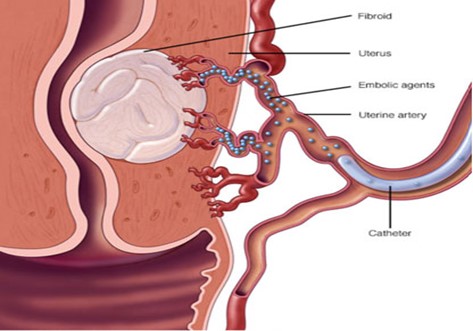
Pros ofUterine Artery Embolization
No majorincisions are needed, leading to a shorter recovery and less pain compared totraditional surgery.
The uterusremains intact, which is important for women who want to have children in the future.
Effectivelyreduces heavy bleeding, pelvic pain, and pressure caused by fibroids.
Can treat many fibroids at the same time


Comments
Post a Comment