MLD FOR LYMPHEDEMA
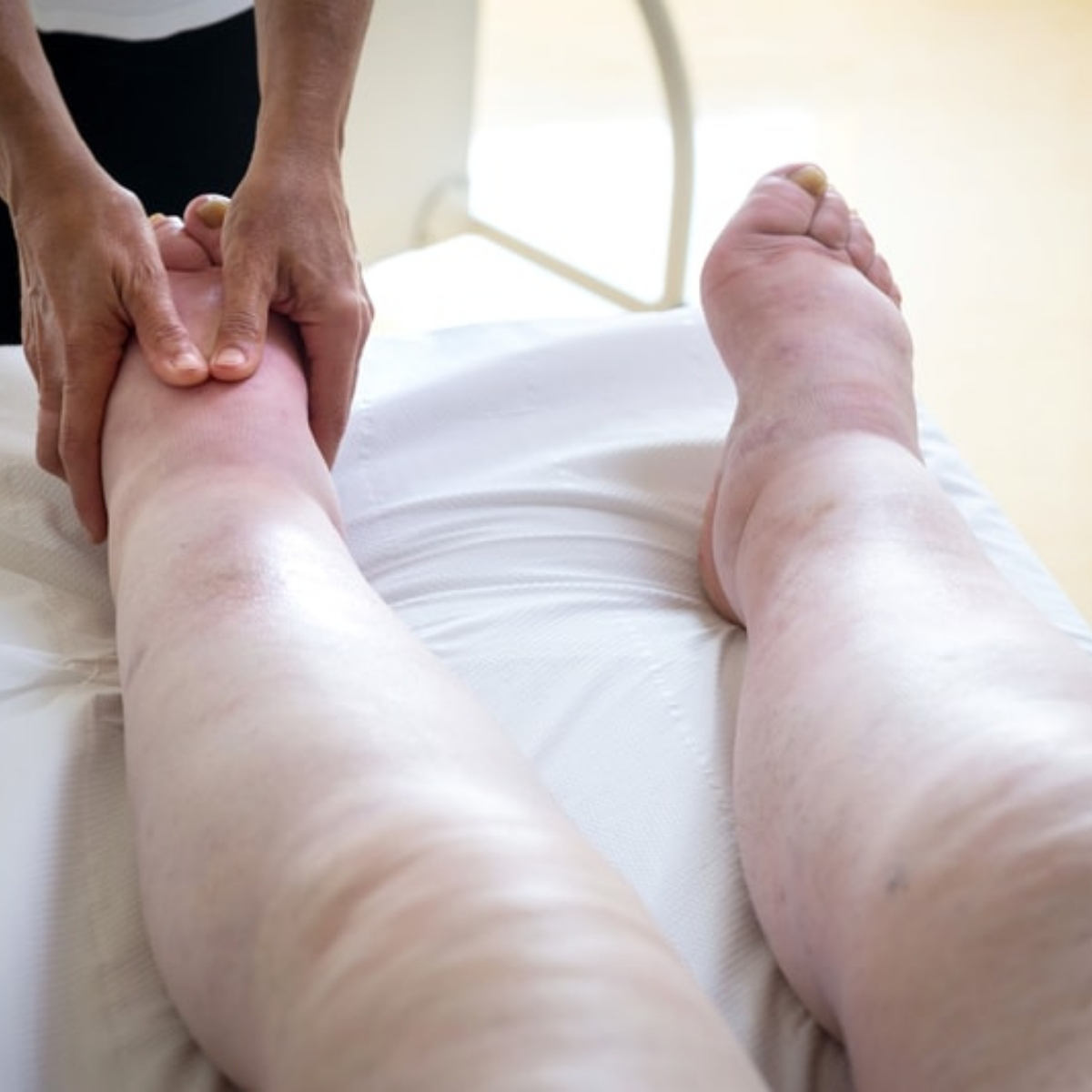
Manual lymphaticdrainage (MLD) is a gentle massage technique that is recognised as a keycomponent of decongestive therapy. MLD aims to encourage fluid away fromcongested areas by increasing activity of normal lymphatics and
bypassingineffective or obliterated lymph vessels.
MLD remainsa specialist skill that needs
regularpractice in order to maintain competence. Deep, heavy-handed massage should beavoided because it may damage tissues and exacerbate oedema by increasingcapillary filtration.
Indications
MLD may beindicated as part of intensive
therapy,transition management, long-term
managementor palliative care .
MLD on itsown is not sufficient treatment
forlymphoedema; it should be combined
with compressiontherapy to support and
maintain itseffects. However, where
compressionis difficult or is not well
tolerated,eg. in lymphoedema of the head,
neck, trunk,breast and genitalia, MLD may
be the onlyrealistic option.
Contraindications
Generalcontraindications
■Acute cellulitis/erysipelas
■Renal failure
■Unstable hypertension
■Severe cardiac insufficiency
■Hepatic cirrhosis with abdominal fluid
(ascites)
■Superior vena cava obstruction
■Untreated tuberculosis or malaria
Localcontraindications
■Untreated thyroid dysfunction
■Primary tumours
■Metastases
Technique
A number ofdifferent techniques exist for
MLD.However, there is little evidence to
demonstratewhich is the most effective and
for whatclinical indications. Essentially,
MLD is agentle massage technique that
follows thelymphatic pathways. The
differentmethods have several aspects in
common:
■performed for up to an hour daily
■usually performed with the patient in the
lyingposition, unless for lymphoedema of
the head andneck
■starts with deep diaphragmatic breathing
■treats the unaffected lymph nodes and
region ofthe body first
■moves proximally to distally to drain the
affectedareas
■movements are slow and rhythmical
■uses gentle pressure – if thepressure is
too hard itstimulates blood flow, the skin
becomes red,and more fluid is
encouragedto move into the tissues
■ends with deep diaphragmatic breathing.
MLD may beconducted daily (or sometimes
twice daily)or three times weekly. A course
of therapymay last three or more weeks,
and may berepeated at intervals of three
months toone year. However, the ideal
frequencyand length of course for MLD
remains tobe defined.
MLD isconducted by practitioners with
trainingat specialist.
SIMPLELYMPHATIC DRAINAGE
Simplelymphatic drainage (SLD) is a
simplifiedself-administered version of MLD
thatpatients and carers can learn and apply
themselves.Ideally, all patients should
be taughtSLD, unless contraindicated . While there may be benefits, some
patientsfind it difficult to learn, memorise
andeffectively incorporate this treatment
into a dailyregimen. Patients who have MLD
may find iteasier to learn SLD.
Technique
In commonwith MLD, there is little robust
evidence tosupport the use or effect of SLD.
There is nodefinitive technique for SLD, but
it issimilar to MLD and is conducted for
10-20minutes daily.
For SLD tobe effective, the healthcare
professionalmust ensure that:
■the patient/carer is motivated
■the patient/carer is sufficiently dextrous
to performSLD
■time is allocated for initial teaching
■teaching is progressive and enables the
patient orcarer to become skilled
■written instruction is given and technique
is observed
■competence in the procedure and the
patient'sability to cope with treatment
are checkedregularly.
SLD isconducted and taught by
practitionerswith appropriate training.
conclusion
Provision ofcomfort and pain relief when other
physicaltherapies are no longer appropriate
■Adjunctive treatment to pain management
At bankers vascular hospital we have our lymphedema management team which guideyou in proper direction .
Here wetake assessment and identification of ideal patient . In lymphedema observationis mu


Comments
Post a Comment